
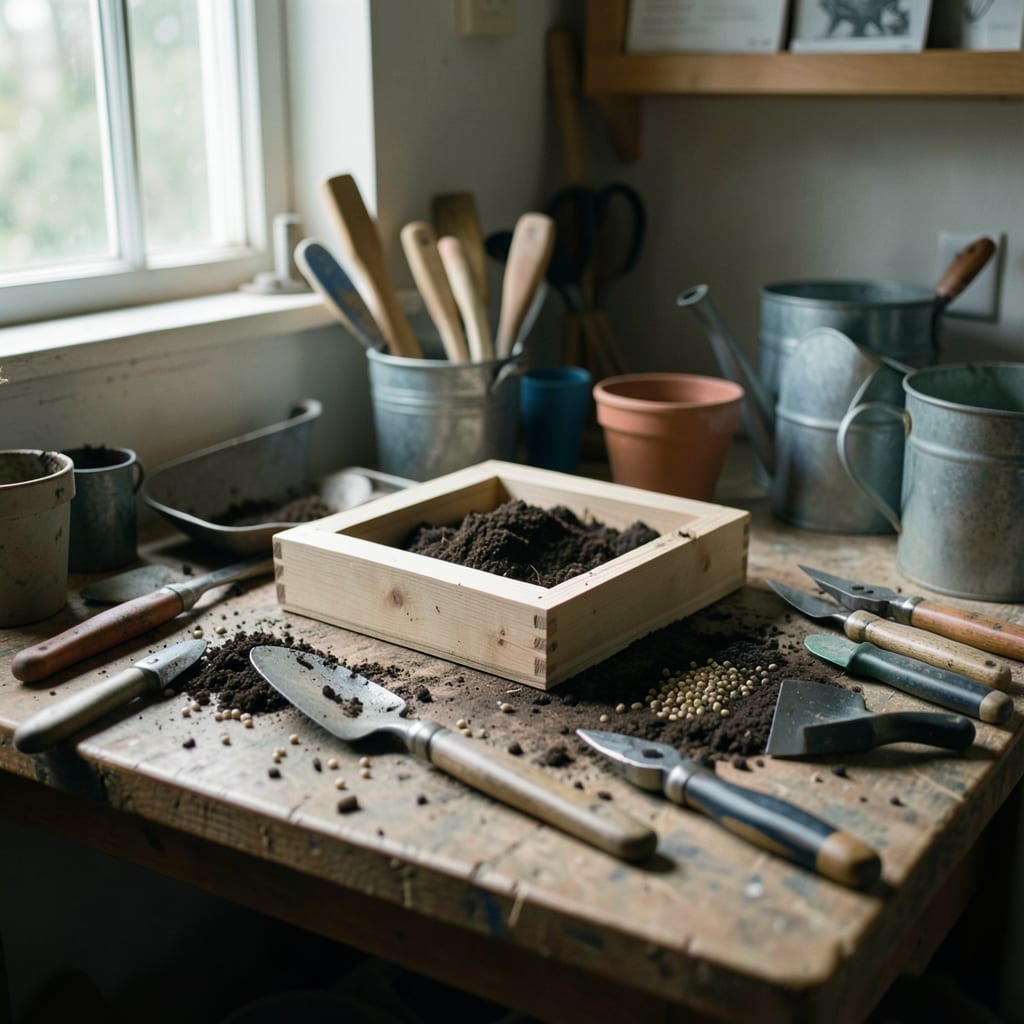
Welcome to Seed Tray
You’ve got a seed packet in your hand—maybe it’s been tucked in a drawer for years, maybe it’s fresh from the catalogue—but you’re not sure where to start. The soil in your region is stubborn clay.
The last time you tried, the seedlings stretched toward the window and collapsed before they hit the dirt. Or maybe you’re just tired of watching other people’s gardens bloom in perfect rows while yours stays stubbornly brown.
This is where *Seed Tray* begins. We don’t just tell you *what* to plant; we show you how to coax life from the soil you’ve got, not the soil you wish you had.
No vague advice about ‘sunny spots’ or ‘well-draining mixes.’ Just the real steps—when to scarify a seed, how to save a drowning flat, why your peppers keep wilting before they ripen—and the quiet satisfaction of seeing something grow because you understood the rules, not just the wishful thinking.
Our story
The first time Shawna tried to grow tomatoes from seed, she was five years old, kneeling in her grandfather’s New Mexico backyard with a plastic cup and a handful of dirt. The seeds sprouted, but the seedlings died when she forgot to water them for three days.
She tried again the next spring, this time with a strict schedule taped to the fridge. By twelve, she was entering county fairs with overripe peppers that had somehow survived the desert heat.
Years later, she noticed something missing in gardening advice: the part where real life interferes. Most guides assumed you had perfect soil, a south-facing fence, and time to babysit seedlings every hour. But gardens don’t work like that for most people.
So she started writing down the hacks that saved her own plants—like using coffee grounds to break up compacted clay, or how to turn a shady balcony into a salad factory—and sharing them with neighbors who kept emailing her in panic over their ‘dying’ herbs.
The turning point came at 3:17 a.m. one April, when her phone buzzed with a photo from a reader in upstate New York: a single, stubborn sunflower pushing through a crack in the pavement. The caption read, *‘I followed your tip about soaking the seeds overnight.
This is my first green thing in three years.’* That’s when *Seed Tray* stopped being a side project and became this site.
What we stand for
We believe gardening should be for people who’ve already given up on it—or at least, for people who haven’t yet.
The rules we teach aren’t about growing prize-winning roses; they’re about growing *something*, even if it’s just a basil plant that survives long enough to make one pesto before the deer eat it.
What you will always get here
- Practical fixes for problems you’ve already Googled twenty times (e.g., *‘Why is my zucchini flowering but not fruiting?’*).
- Honest timelines—how long things *really* take, not the catalog’s ‘60 days to harvest’ fantasy.
- The tools that actually work in your space, whether it’s a windowsill, a cracked terracotta pot, or a raised bed filled with last year’s mulch.
- No judgment for ‘beginner mistakes.’ We’ve all killed a plant by overwatering it out of guilt.
Meet the team

Behind *Seed Tray* is a small group of gardeners who’ve spent more time debugging their own failures than celebrating their successes. We’re not botanists or agronomists—just people who’ve learned the hard way that soil doesn’t care about your intentions.
Our work starts with the questions real growers send us: *‘My soil is pure sand—what do I do?’* or *‘How do I stop my tomatoes from cracking like this?’* and ends with answers that actually solve the problem, not just describe the symptom.
Shawna Vasquez
Shawna Vasquez is the founder and editor of *Seed Tray*, and her approach to gardening is shaped by two opposing forces: her grandfather’s patient, earthy lessons and her own tendency to treat plants like they’re on a strict deadline.
She started digging in the dirt at five, helping her grandfather plant tomatoes in the alkaline soil of southern New Mexico, and spent her teens sneaking extra water to her grandfather’s struggling chile plants during drought years.
Now, she runs the site from a sunroom cluttered with seed trays, a half-empty bag of potting mix, and a whiteboard covered in scribbled notes about soil pH.
Her work here is rooted in the failures that taught her the most—like the time she accidentally turned a batch of compost into a science experiment (the smell attracted every stray cat in the neighborhood) or the year her pepper plants bolted because she forgot to pinch them back.
She documents these lessons not to shame beginners, but to prove that even the ‘experts’ have a shelf full of sad, half-dead seedlings.
Her desk is always strewn with seed packets, a pair of pruning shears, and a notebook where she jots down the exact hour she waters each pot—a habit born from years of forgetting.
I still get emails from people who say they ‘finally got it’ after trying one of my soil fixes. But the real win isn’t the thriving garden—it’s the moment someone realizes they don’t need perfect conditions. You just need to know the one thing you’re doing wrong.
Shawna Vasquez
How we create our content
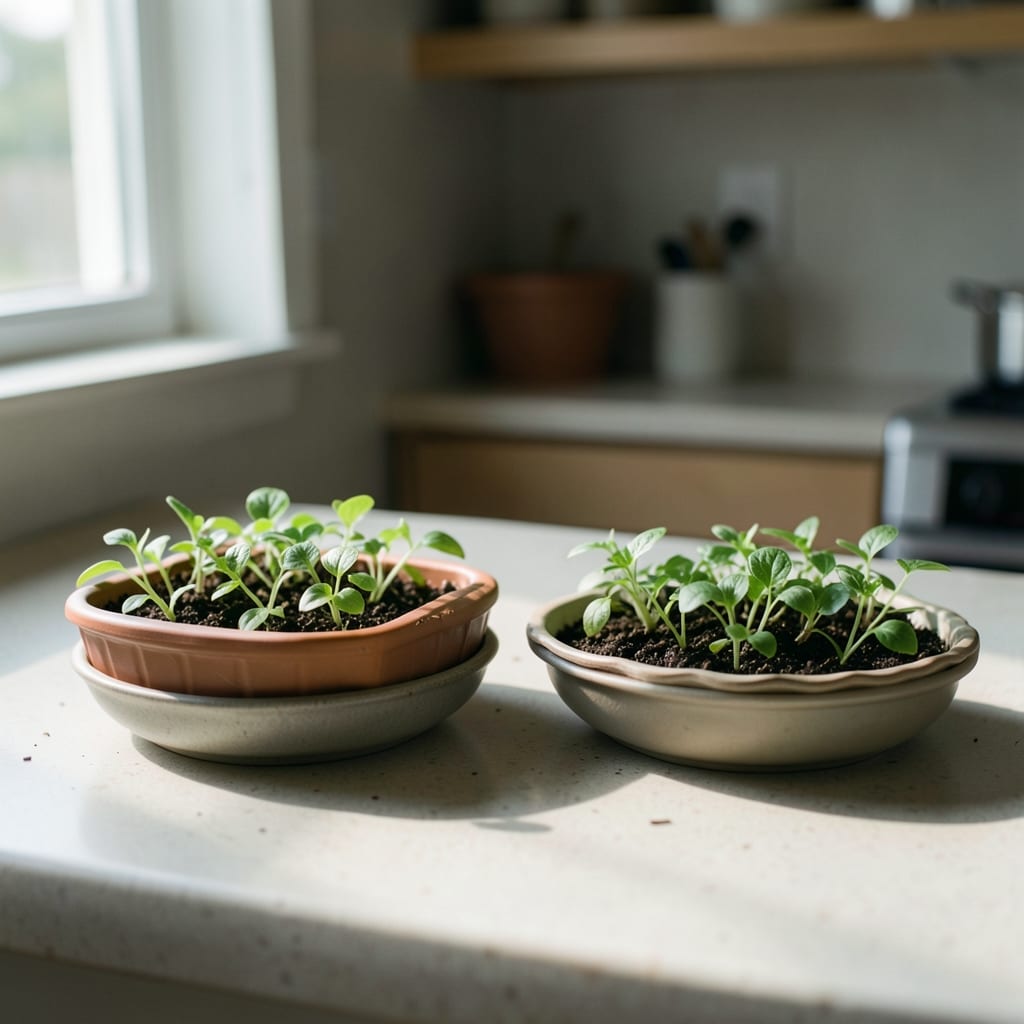
Every piece on *Seed Tray* begins with a question—or a crisis.
It might be a reader’s desperate email (*‘My cucumbers are turning yellow overnight’*), a comment on a social post (*‘How do I save my dying ferns?’*), or even Shawna’s own midweek panic (*‘Why did my basil suddenly taste like soap?’*).
We don’t start with a list of ‘best practices’; we start with the problem as it exists in the real world, where soil is heavy with clay, rain washes away fertilizer, and squirrels treat your garden like an all-you-can-eat buffet.
Step 1: the diagnosis
The first stage is figuring out what’s *actually* wrong. This means digging into the details: the color of the wilting leaves (yellow? brown? purple?), the texture of the soil (sticky? dry as dust?), the plant’s growth stage (just sprouted? flowering?).
We test soil pH with a cheap kit, measure moisture with a finger (yes, really), and compare symptoms to a list of common offenders—overwatering, underfeeding, pests, or simply the wrong plant for the spot.
For example, if your tomatoes are cracking, we don’t just say ‘water less’; we break it down: *‘Was it a heatwave? Did you fertilize too late? Is your soil retaining too much water?’* The goal isn’t to guess; it’s to isolate the one thing that’s throwing everything off.
This step takes time—sometimes days—because gardening problems rarely have one cause. A ‘dying’ plant might be thirsty, but it might also be root-bound, or it might be that the pot has no drainage. We document every variable: the last time it was watered, the light it’s getting, the temperature swings.
The result is a checklist of possibilities, ranked by how likely they are. For instance, if your peppers are dropping flowers, we’d rule out pests first (aphids love pepper blooms), then check for temperature stress (below 60°F at night shuts down pollination), before even suggesting fertilizer adjustments.
Step 2: the fix (and the follow-up)
Once we’ve narrowed it down, the fix isn’t just a solution—it’s a system. If the problem is compacted soil, we don’t just say ‘add compost.’ We say: *‘Dig in 2 inches of coarse sand mixed with aged manure, then water deeply to settle it.
Check drainage by filling a hole with water—if it drains in under an hour, you’re good.
If not, you’ve got clay issues.’* We include backup plans: *‘If your ferns keep browning, it’s not just low humidity—try misting twice a day *and* move them away from the heating vent.’* Every fix is paired with a ‘red flag’: *‘If the problem doesn’t improve in a week, it’s not a watering issue—it’s likely root rot.’*
The final step is the follow-up. We don’t just publish a one-time answer; we ask readers to report back. Did the soil loosen up? Did the tomatoes stop cracking? If not, we dig deeper.
This is how we learn that ‘add more sunlight’ often means moving the plant to a *specific* windowsill (south-facing, 6+ hours of direct light), not just ‘near the window.’ The process turns a single question into a living troubleshooting guide—one that grows more accurate with every garden’s experience.
Join our community
This site exists because gardening is easier—and more rewarding—when you’re not figuring it out alone.
Here, you’ll find answers to questions like *‘How do I grow herbs in a windowsill with fluorescent light?’* or *‘Why is my compost heap attracting flies?’* But the real value comes from the questions *you* bring.
We feature reader successes (like the person who turned their balcony into a microgreens factory) and failures (like the time a batch of seeds sprouted *inside* the packet—yes, it happens). If you’ve got a gardening puzzle, we’ll help you solve it. And if your solution works for others?
It might end up on the site.
Let's connect
We love hearing about the gardens you’re fighting for—or winning against. Send us your weirdest gardening stories (the time a squirrel stole your entire pepper crop, the year your zucchini plants outgrew the trellis and started sprawling across the driveway).
If you’ve cracked a problem we haven’t covered, we’d love to turn it into a guide. And if you’re just starting out? We’re here for the panic emails too.
Ready to dig in? Your next question—or your first seed—is waiting on the contact page.
The guides are grouped by category: Advice, Aphids, Blooming, Companion Plants, Container Gardens and Diseases.