
Lawn
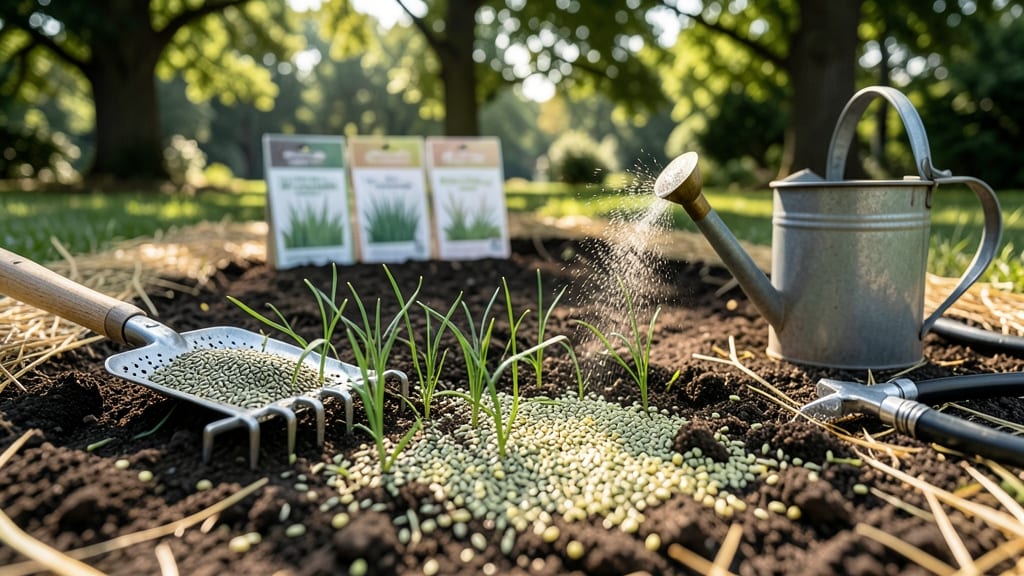
The best time to seed grass in fall is 6-8 weeks before your first frost—that’s when your lawn gets a head start for spring. 🌱 I learned this the hard way after seeding too late one autumn, only to watch my grass struggle through winter.
The cooler temperatures mean less weed competition, and the roots establish deep before the cold sets in.
This method works best for cool-season grasses like fescue, bluegrass, and ryegrass, which thrive when planted in fall. Warm-season grasses (like Bermuda or Zoysia) don’t do well in fall, so timing matters. The key is preparing the soil first—loosen it, remove debris, and level the area for even growth.
By spring, you’ll see a thicker, greener lawn than neighbors who seeded in spring. The roots grow stronger over winter, so your grass handles heat and drought better. Plus, you skip the summer heat stress that makes spring seeding so risky.
Works in most climates, but adjust for early frosts in the North or mild winters in the South. Just don’t wait too long—late fall seeding can leave your grass vulnerable to winter kill. Here’s how to time it perfectly for your zone.
📚 In This Guide
- What you need
- Instructions
- Tips and common mistakes
- Wrapping up and next steps
What you need
- ● Grass seed: Choose a high-quality blend suited to your climate (e.g., tall fescue, ryegrass, or bluegrass). Aim for 5–8 lbs per 1,000 sq ft for full coverage.
- ● Lawn rake: A bendable-tine rake (for aerating) or a stiff-bristle rake (for leveling). Rent a core aerator if your lawn is compacted (1/4"–1/2" tines recommended).
- ○ Soil test kit: Optional but helpful to check pH (6.0–7.0 ideal) and nutrient levels. Adjust with lime or fertilizer if needed.
- ● Starter fertilizer: A high-phosphorus (P) blend (e.g., 10-20-10 ratio) to encourage root growth. Apply 1 lb per 100 sq ft.
- ● Topsoil or compost: 1/4" layer over seeded areas to retain moisture and block weeds.
- ● Watering supplies: Hose with a gentle spray nozzle (or sprinkler).
- ● Water timer (for consistent moisture, 2–3 times daily for 10–15 mins).
- ● Seed spreader: Broadcast or drop spreader for even distribution ($50–$150 range).
- ● Mulching fabric: Lightweight biodegradable netting to protect seeds from birds and erosion.
- ● Pre-emergent herbicide: Apply 4–6 weeks before seeding to prevent weeds (follow label rates).
- ● Soil conditioners: Gypsum (for clay soil) or peat moss (for sandy soil) to improve texture.
- ○ Lawn roller: Lightweight (50–100 lbs) to press seed into soil (optional for rocky or uneven areas).
Step-by-step guide to timing fall grass seed for perfect spring lawns
Here's the exact window and method I swear by for fall seeding—it's why my lawn always greens up thick and even.
⏰ Step 1: Pinpoint Your Perfect 4-6 Week Window
Seed grass when daytime highs hit 75°F but nights drop to 60°F—this happens 4-6 weeks before your first frost date. For most regions, that means late August through mid-September. Check your local frost date and count backward—this timing gives seeds time to germinate and establish roots before winter slows growth.
Here's the thing—if you seed too early, summer heat stresses seedlings. Too late, and roots won't anchor before cold sets in. I always mark my calendar with the 4-6 week countdown and set reminders. The goal is strong root development before dormancy, not immediate green-up.
🌱 Step 2: Prepare Soil When Conditions Are Ideal
Wait until afternoon temperatures stay below 80°F—this prevents seed desiccation. Loosen soil to 4 inches deep with a rake, breaking up compaction. Add 1 inch of compost (if available) to improve moisture retention, then water deeply until soil is damp 2 inches down. The surface should look dark, not dry.
I test soil moisture by squeezing a handful—it should hold together but not crumble. If your area gets less than 1 inch of rain weekly, schedule irrigation for twice weekly after seeding. Fall's cooler temps mean less evaporation, but consistent moisture is still critical for germination.
💧 Step 3: Seed at the Right Depth and Frequency
Spread ½ pound of seed per 100 square feet evenly using a broadcast spreader. For larger areas, divide into sections and overlap passes by 10%. Cover seeds with ¼ inch of fine soil or compost—this protects them from birds and wind while allowing light penetration.
Lightly rake the surface to ensure even coverage, then water gently but thoroughly until soil is moist 1 inch deep. Keep soil consistently damp (not soggy) for 14-21 days—this is when most germination occurs. You'll see first green shoots in 7-10 days if conditions are perfect.
☀️ Step 4: Maintain Moisture and Light Through Establishment
Water lightly daily for the first week, then every other day until seedlings reach 2 inches tall. Avoid heavy watering—it washes away seeds and disrupts root contact with soil. I use a sprinkler with fine mist to prevent erosion and keep seeds in place.
Once seedlings emerge, reduce frequency to 3-4 times weekly but increase depth to ½ inch per watering. This encourages deep root growth. Mow when grass reaches 3-4 inches tall—using a sharp blade set to 1 inch—to prevent scalping young roots.
✂️ Step 5: Winterize for Spring Thickness
When daytime highs drop below 50°F, reduce watering to once weekly unless drought occurs. Apply 1 inch of mulch (straw or leaves) to protect seeds from winter winds. In colder zones, a light frost won't harm established seedlings—it actually helps harden off tender roots.
Spring will reward your timing with dense, uniform growth that fills in bare spots naturally. The key is patience—fall seeding isn't about instant green, but root strength that carries through winter. By next spring, you'll have a lawn that's thicker and greener than neighbors who seeded in spring.
Tips & tricks for perfect fall grass seeding
Here's what nobody tells you about getting that lush spring lawn—these are the secrets that make all the difference.
Temperature Matters: The 75°F/60°F window isn't just a suggestion—it's the sweet spot where seeds germinate without stress. I've seen seedlings fail when temps creep above 80°F during the day, even if nights are cool. Use a weather app to track your daily highs and lows for at least 3 days before seeding to confirm you're in that perfect range. This is the single biggest factor in whether your seeds will thrive or wither.
Soil Prep is Non-Negotiable: That 4-inch deep loosening isn't just about looks—it's about creating the perfect environment for roots to establish. I've ruined lawns by skipping this step, thinking "it'll be fine." Use a garden fork to break up compacted soil, especially if you've had heavy foot traffic or drought. The goal is to create a fluffy bed where seeds can settle at that perfect ¼-inch depth without struggling to push through hardpan.
Watering Wisdom: The 14-21 day dampness window is critical, but how you water matters just as much as when. I use a rain gauge to measure exactly ½ inch of water every time I water—this prevents both underwatering and overwatering. Morning watering (between 6-10am) is ideal because it gives seeds time to absorb moisture before evaporation kicks in. And here's a pro move: water the soil before seeding to ensure it's moist at the right depth—don't just water after.
Equipment Upgrade: Don't have a broadcast spreader? A simple DIY solution works just as well. Cut the bottom out of an old oatmeal container, attach it to a stick, and pour seeds through the hole while walking backward. This gives you that even coverage without spending money. For larger areas, divide into 50-square-foot sections and mark them with flags to avoid overlapping—this prevents patchy growth that looks unprofessional.
Pro Tips for Best Time To Seed Grass In Fall
- Here's what nobody tells you about getting that lush spring lawn—these are the secrets that make all the difference.
- Temperature Matters: The 75°F/60°F window isn't just a suggestion—it's the sweet spot where seeds germinate without stress.
- Soil Prep is Non-Negotiable: That 4-inch deep loosening isn't just about looks—it's about creating the perfect environment for roots to establish.
Frequently asked questions
Got questions about seeding grass in the fall? You’re not alone! Here are some of the most common concerns—and straightforward answers—to help you get started with confidence.
What’s the exact best time to seed grass in the fall?
The sweet spot is typically 4–6 weeks before your first hard frost (usually late September to early November, depending on your climate zone). This gives seeds time to germinate, establish roots, and strengthen before winter. Check your local frost dates for precision!
Can I seed grass in late fall if I missed the ideal window?
Yes, but with caveats! If temperatures drop below 40°F (4°C), germination slows. For late fall seeding, use winter ryegrass (cold-tolerant) or a cool-season blend. Cover seeds lightly with straw to protect them from frost. Spring growth may be delayed, but it’s still possible!
Do I need to fertilize before seeding, or should I wait?
Start with a starter fertilizer (high in phosphorus) at seeding to boost root growth. Avoid heavy nitrogen until after germination (it can burn tender seedlings). A light top-dressing of compost or a slow-release fertilizer 4–6 weeks post-seeding also helps.
What if my lawn has weeds popping up after seeding?
Weeds are common in new lawns! Use a pre-emergent herbicide before seeding (like corn gluten meal) to prevent crabgrass. For existing weeds, spot-treat with a vinegar-based spray (organic) or a selective herbicide after germination. Avoid harsh chemicals near new grass.
How do I know if my grass seeds are still viable for fall planting?
Check the seed packet date—most seeds last 1–2 years if stored in a cool, dry place. For older seeds, do a float test: Drop seeds in water. If they sink, they’re likely viable; if they float, toss them. Pro tip: Buy fresh seeds for the best germination rates!
Can I overseed an existing lawn in the fall, or do I need to reseed bare spots?
Both work! For overseeding, mow low (1–1.5 inches), aerate, and spread seeds thinly. For bare spots, rake the soil, add compost, and seed densely. Overseeding thickens grass, while spot-seeding fills gaps. Water gently to avoid washing seeds away.
Wrapping up and next steps
Timing is everything when it comes to seeding grass in the fall—aim for late August to early October in most regions for the best results! 🌱 With cooler temperatures, fewer weeds, and consistent moisture, your lawn will have the ideal conditions to establish strong roots before winter.
Once you’ve chosen the perfect window, gather your supplies, prep the soil, and sow those seeds with confidence.
Ready to take action? Start by testing your soil and marking your calendar for the optimal seeding dates in your area. A little planning now means a greener, healthier lawn come springtime—no excuses!