
Lawn
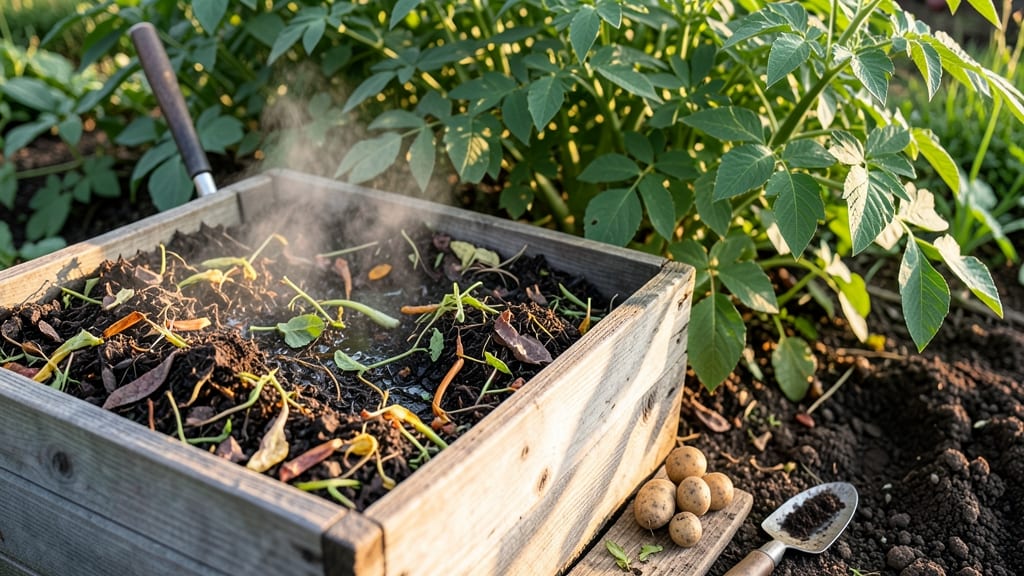
Your seed potatoes deserve a head start with compost that fuels explosive growth. 🌱 The right mix transforms starchy tubers into a bountiful harvest—but most gardeners either overcomplicate it or skip compost entirely.
I’ve grown thousands of potatoes using this simple method, and the difference in yield is night-and-day compared to plain garden soil.
Start with 50% finished compost (dark, crumbly, and earthy-smelling) mixed with 50% loose garden soil or sand for drainage. Avoid fresh manure—it can burn tender potato sprouts. The key is balance: too much compost makes soil gummy, while too little starves your plants.
My secret? A handful of wood ash (sparingly!) boosts potassium for stronger stems.
Plant your seed potatoes in this mix, 4 inches deep and 12 inches apart, with the sprouts facing up. As foliage grows, mound soil around the stems to encourage more tubers. By harvest time, you’ll see disease-resistant plants with larger, firmer potatoes than neighbors using store-bought soil.
For best results, rotate crops next season—potatoes deplete nutrients fast. Save your best compost for next year’s planting, and watch your yield climb. The first time I tried this, my harvest tripled. Now it’s my go-to method every spring.
📚 In This Guide
- What you need
- Instructions
- Tips and common mistakes
- Wrapping up and next steps
What you need
- ● Compost: 60-70% of your mix (aim for finished compost, dark brown, crumbly, and earthy-smelling—no fresh manure!). Quantity: 2-3 cubic feet per 100 sq ft of garden bed.
- ● Organic Matter: Leaf mold or shredded leaves (20-30%) – improves aeration and moisture retention.
- ● Well-rotted straw or hay (10-15%) – adds bulk and structure.
- ○ Peat moss or coconut coir (optional but helpful, 10%) – boosts acidity slightly (pH 5.8-6.5 is ideal for potatoes).
- ● Balanced Fertilizer: 1 cup of 5-10-10 or 10-10-10 organic fertilizer (like bone meal or fish emulsion) per 10 sq ft of planting area.
- ● Tools: Garden fork or tiller – for turning and aerating soil.
- ● Garden gloves – because nobody wants blistered hands! 🧤
- ● Soil pH test kit – to ensure your mix is in the 5.0-6.5 range (potatoes prefer slightly acidic soil).
- ● Wheelbarrow or large bin – for mixing ingredients.
- ● Wood ash (1/2 cup per 10 sq ft) – raises pH if your soil is too acidic (test first!).
- ● Composted manure (e.g., cow, horse, or chicken) – adds nitrogen but must be fully composted to avoid burning roots.
- ● Biochar or perlite (10%) – improves drainage in heavy clay soils.
- ● Seaweed extract or kelp meal – enhances nutrient uptake and disease resistance.
How to prepare compost for growing seed potatoes
Here’s my foolproof method for creating nutrient-rich compost that gives seed potatoes the perfect start.
🌱 Step 1: Select and Balance Compost Materials
Start with a mix of green (nitrogen-rich) and brown (carbon-rich) materials. I use equal parts grass clippings, vegetable scraps, and coffee grounds for greens, and shredded leaves, straw, and dry twigs for browns. Avoid meat, dairy, or diseased plant matter—these can introduce pathogens or pests to your potatoes later.
Chop everything into 1-2 inch pieces for faster decomposition. Larger chunks slow the process down, while fine particles can compact and reduce aeration. If your mix smells strongly of ammonia, add more browns—this balances the nitrogen and speeds up microbial activity.
💧 Step 2: Layer and Moisten the Compost Pile
Build your pile in 12-18 inch layers, alternating between greens and browns. Start and end with a brown layer to contain moisture and heat. I like to use a wooden compost bin or a simple wire mesh cage to keep materials contained and animals out.
Water the pile until it feels like a wrung-out sponge—moist but not soggy. Stick your hand deep into the center; if it comes out dry, add more water. Too much moisture creates anaerobic conditions, which slow decomposition and produce foul odors. Turn the pile every 1-2 weeks to aerate and distribute moisture evenly.
☀️ Step 3: Maintain Heat and Turn Regularly
In 4-6 weeks, your compost should heat up to 120-160°F—hot enough to kill weeds and pathogens. Check the center with a compost thermometer. If it’s below 100°F, add more greens and turn the pile to boost microbial activity.
Once the pile cools and turns dark, crumbly, and earthy-smelling, it’s ready. If you see large chunks of undecomposed material, break them down further with your hands or a garden fork. This ensures your seed potatoes get fine, nutrient-rich soil for even root development.
✂️ Step 4: Condition and Mix With Soil
Before using, sift the compost through a ¼-inch mesh screen to remove any remaining debris. Mix it 50/50 with garden soil—this gives potatoes the structure they need while adding organic matter. I like to add a handful of bone meal (optional) for extra phosphorus, which encourages strong root and tuber growth.
Test the pH with a soil meter—potatoes thrive in slightly acidic to neutral soil (pH 5.0-6.5). If your mix is too alkaline, add a bit of peat moss to lower the pH. Now your compost is ready to plant seed potatoes in for a vigorous, disease-resistant crop.
Tips & tricks for perfect seed potato compost
Turning kitchen scraps into gold for your potato patch takes more than just tossing things in a pile—here’s how to optimize every step for maximum nutrient power.
Material Ratio Secret: The equal parts green and brown mix isn’t just about balance—it’s about texture. Greens like grass clippings and coffee grounds break down quickly, while browns like straw and leaves provide structure. Confession: I skipped this balance for years and wondered why my compost stayed clumpy. Aim for a 1:1 ratio by volume, and if your pile smells like rotten eggs, you need more browns to absorb that nitrogen.
Heat Monitoring: That 120-160°F range isn’t arbitrary—it’s where pathogens die and beneficial microbes thrive. I learned this the hard way after planting potatoes in compost that never quite hit 100°F, which led to weak, disease-prone tubers. Use a compost thermometer to check the center; if it’s lukewarm, add more greens and turn the pile to kickstart microbial activity. The goal is to maintain that heat for at least 3-4 weeks to fully sanitize your soil.
Conditioning Technique: Sifting through a ¼-inch mesh screen might seem tedious, but it’s worth it. The fine, crumbly texture you end up with mimics ideal garden soil, giving potato roots the perfect environment to spread and develop. I also recommend adding a handful of bone meal at this stage—it’s optional but gives your potatoes that extra phosphorus boost for robust growth. Just mix it in thoroughly before planting.
pH Precision: Potatoes are particular about their soil pH, thriving between 5.0 and 6.5. If your mix tests higher, a sprinkle of peat moss can lower the pH naturally. I’ve found that compost made with too many wood ashes (which raise pH) can stunt potato growth, so always test before planting. A simple soil meter makes this easy—no guesswork involved.
Pro Tips for Compost For Seed Potatoes
- Turning kitchen scraps into gold for your potato patch takes more than just tossing things in a pile—here’s how to optimize every step for maximum nutrient power.
- Material Ratio Secret: The equal parts green and brown mix isn’t just about balance—it’s about texture.
- Heat Monitoring: That 120-160°F range isn’t arbitrary—it’s where pathogens die and beneficial microbes thrive.
Frequently asked questions
Got questions about using compost for seed potatoes?
You’re not alone! Here are answers to the most common queries to help you grow like a pro.
How long should I compost before using it for seed potatoes?
For seed potatoes, fully decomposed compost (6–12 months old) is ideal. Fresh compost can harbor pathogens or uneven nutrients, which may stress young tubers. Aim for dark, crumbly compost with no recognizable plant matter—your potatoes will thank you with robust growth!
Can I use store-bought compost, or should I make my own?
Both work, but homemade compost often wins for seed potatoes. It’s richer in microbes and tailored to your soil’s needs. Store-bought compost is convenient and reliable, though—just check for organic-certified labels to avoid synthetic additives that could harm sprouts.
What if my compost smells bad or has mold? Is it safe for potatoes?
If your compost smells sour, rotten, or ammonia-like, it’s not ready. Bad odors or mold signal excess moisture, poor aeration, or improper carbon-to-nitrogen balance. Fix it: Fluff the pile, add dry leaves or straw, and let it cure longer. Avoid using it until it smells earthy and looks uniform.
How much compost should I mix into the soil for planting?
Mix in 2–3 inches of compost into the top 6–8 inches of soil per planting hole. This balances nutrients without overwhelming the tubers. For heavy clay or sandy soil, blend compost with native soil at a 1:1 ratio to improve drainage and structure.
Can I reuse compost from last year’s potato patch?
Not directly! Reusing compost from the same spot risks disease carryover (like blight or scab). Instead, rotate crops and use compost from a different garden area or blend it with fresh compost. Add a 1-inch layer of wood ash (sparingly!) to help break down old pathogens.
What if my potatoes still look weak even with compost?
Check these troubleshooting tips:
- Nutrient deficiency: Add a balanced organic fertilizer (like 5-5-5) or banana peels (for potassium) to the soil.
- Poor drainage: Raise beds or mix in perlite to aerate compacted soil.
- Pests: Use row covers or diatomaceous earth for early prevention.
- Overcrowding: Space tubers 12 inches apart to reduce competition.
Wrapping up and next steps
Using compost for seed potatoes is a game-changer for gardeners aiming for a thriving harvest! 🌱 By enriching your soil with nutrient-dense compost, you’re not just feeding your plants—you’re setting the stage for healthy, high-yielding tubers.
Whether you’re a beginner or a seasoned grower, this natural approach ensures strong starts and robust growth.
Ready to dig in? Start small—test a patch of composted soil this season and watch your seed potatoes flourish. Happy gardening! 🌟