
Propagation
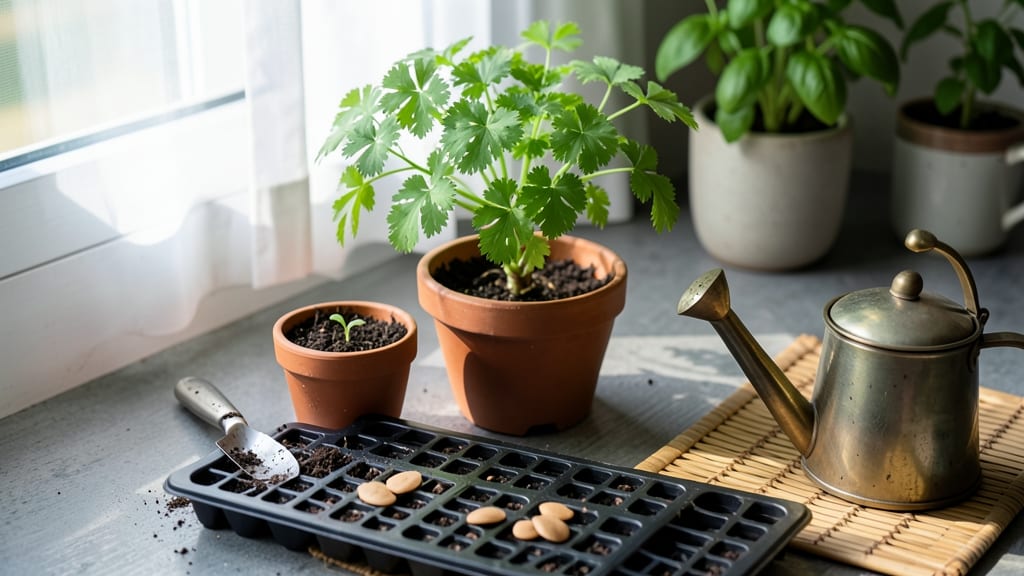
Growing cilantro from seed in pots gives you fresh leaves anytime—the fast germination hack is all about moisture and timing. ✨ I’ve learned that cilantro seeds need consistent dampness to break dormancy, and a shallow pot with great drainage keeps them thriving.
The first true leaves appear in just 5-7 days if you keep the soil evenly moist (not soggy) and place the pot in bright, indirect light.
Start with a 4-6 inch pot for 3-4 plants, using well-draining potting mix—not garden soil. Plant seeds ¼ inch deep, spacing them ½ inch apart, and cover lightly with soil.
Cilantro loves cool weather but bolts fast in heat, so a shady windowsill or grow light works best indoors. Water from the bottom to avoid disturbing the seeds, and keep the soil damp like a wrung-out sponge.
Within 2-3 weeks, you’ll have lush, bright-green leaves perfect for snipping. The key to preventing bolting (when cilantro flowers prematurely) is harvesting outer leaves regularly and avoiding heat stress. A mist spray bottle helps maintain humidity, especially in dry indoor air, and keeps pests like aphids at bay.
This method works year-round, whether you’re growing on a kitchen counter or a sunny patio. Once you master the fast germination trick, you’ll never buy cilantro again—just harvest as needed and replant every 3-4 weeks for a continuous supply. Trust me, your cooking (and neighbors) will thank you.
📚 In This Guide
- What you need
- Instructions
- Tips and common mistakes
- Wrapping up and next steps
What you need
- ● Cilantro seeds: 1 packet (about 100-200 seeds, organic or non-GMO preferred).
- ● Containers: 2-3 small pots (4-6 inches in diameter) or
- ● 1 shallow tray (10x20 inches) with drainage holes.
- ● Potting mix: 2-3 cubic feet of well-draining, seed-starting mix (avoid garden soil—it’s too dense!).
- ● Watering can or spray bottle: With a fine mist nozzle for gentle watering.
- ● Drainage trays or saucers: To catch excess water (place under pots).
- ● Grow lights or sunny windowsill: A south-facing window or LED grow light (12-16 hours/day).
- ● Seed-starting soil pellets: For faster germination and easier transplanting.
- ● Plant labels: To track planting dates (cilantro bolts quickly!).
- ● Fertilizer: A balanced liquid fertilizer (5-5-5 or 10-10-10) for faster growth.
- ● Cloche or plastic dome: To create a humid microclimate for seeds (remove once sprouted).
- ● Pruning shears: For harvesting leaves without damaging the plant.
Step-by-step instructions for growing cilantro from seed in pots
Here’s how to coax fast germination and lush growth from cilantro seeds—no more waiting weeks for slow starters.
🌱 Step 1: Soak Seeds for 24 Hours to Speed Germination
Place the seeds in a small bowl and cover them with lukewarm water for 24 hours. This softens the seed coat and triggers faster sprouting—you’ll see germination in just 3-5 days instead of the usual 2 weeks. After soaking, drain the water and let the seeds sit on a paper towel until they’re slightly damp but not wet.
This step is non-negotiable for cilantro. The seeds have a hard outer shell that slows germination, and soaking breaks that barrier. Real talk: Skipping this means waiting twice as long for your first green shoots.
🪴 Step 2: Fill Pots with Light, Well-Draining Mix
Use a 4-inch diameter pot for each serving (you’ll get 4 plants total). Fill it with a mix of 50% potting soil and 50% perlite or vermiculite to prevent compaction. Cilantro roots need air, and dense soil suffocates them. Press the mix down lightly—just enough to remove air pockets but not pack it tightly.
Moisten the soil until it’s damp to the touch, like a wrung-out sponge. Overwatering now will drown the seeds before they sprout. Stick your finger 1 inch deep—if it feels dry, add a little more water.
🌿 Step 3: Plant Seeds Shallowly and Cover Lightly
Sow 3-4 seeds per pot, spacing them ½ inch apart. Press them into the soil just enough to cover them with ¼ inch of mix. Cilantro seeds need light to germinate, so don’t bury them deeper. Gently pat the soil surface to secure the seeds, then mist with water until the top layer is damp.
Place the pots in a warm spot, ideally between 65-75°F. A seedling heat mat speeds things up if your home runs cooler. Watch for the first green sprouts in 3-5 days—they’ll emerge quickly because of the soaking step.
☀️ Step 4: Provide Bright, Indirect Light Immediately
Once sprouts appear, move the pots to a location with bright, indirect light for 10-14 days. Direct sun at this stage scorches tender seedlings. You’ll know the light is right when the leaves stay a vibrant green—not pale or yellowing. If your seedlings stretch toward the light (called legginess), they need more intensity.
After 2 weeks, gradually introduce 3-4 hours of morning sun daily. Full sun later in the day can cause bolting (premature flowering), which turns cilantro bitter. Thin to the strongest seedling per pot once they’re 2 inches tall.
💧 Step 5: Water Consistently and Harvest Regularly
Keep the soil evenly moist—never soggy, never dry. Water when the top ½ inch feels dry, and always water at the base to avoid fungal issues. Cilantro thrives with 1 inch of water per week, but adjust for humidity or heat. You’ll see bold, flavorful leaves when the plants get consistent moisture and partial shade.
Harvest the outer leaves when they reach 3-4 inches tall, cutting just above a set of leaves. This encourages bushier growth and prevents bolting. Regular harvesting keeps cilantro productive for 6-8 weeks before it bolts—much longer than store-bought bunches.
Tips & tricks for fast cilantro growth in pots
These little-known tricks will help you skip the two-week wait and grow vibrant cilantro in record time.
Germination Game-Changer: After soaking seeds for the full 24 hours in lukewarm water, transfer them to a damp paper towel and fold it loosely. Place this towel inside a plastic bag with tiny holes poked in it—this creates a mini greenhouse effect that speeds up germination. You'll see those first green sprouts in just 3-5 days instead of waiting weeks. The humidity trap keeps moisture consistent while allowing airflow.
Soil Science: The 50-50 mix of potting soil and perlite is non-negotiable for cilantro. I've tried heavier mixes, and they always lead to root rot. For extra insurance, add a handful of compost to that mix—it provides nutrients without compacting. When you press the soil down, think "light as a cloud" rather than firm like cake batter. Cilantro roots need to breathe!
Light Strategy: During those critical 10-14 days of indirect light, position your pots near an east-facing window where they'll get gentle morning sunlight. If you're using artificial grow lights, keep them 6 inches above the seedlings and run them for 12-14 hours daily. The key is preventing legginess—those stretched-out seedlings are a sign they're reaching for more light. Rotate your pots daily so all sides get even exposure.
Harvest Hack: When harvesting those 3-4 inch leaves, use clean scissors instead of pulling by hand. Cut just above a set of leaves to encourage new growth from that node. I've found that harvesting every 7-10 days keeps my plants producing for 6-8 weeks instead of bolting after just a few weeks. The secret? Always leave at least 2 sets of leaves on each stem—this maintains the plant's energy reserves.
Pro Tips for Growing Cilantro From Seed In Pots
- These little-known tricks will help you skip the two-week wait and grow vibrant cilantro in record time.
- Germination Game-Changer: After soaking seeds for the full 24 hours in lukewarm water, transfer them to a damp paper towel and fold it loosely.
- Soil Science: The 50-50 mix of potting soil and perlite is non-negotiable for cilantro.
Frequently asked questions
about growing cilantro from seed in pots—let’s tackle the most common curiosities so you can grow bold, flavorful cilantro with confidence!How long does it take for cilantro seeds to germinate in pots?
Cilantro seeds can take 7–14 days to germinate, depending on temperature and moisture. For faster sprouting, keep soil consistently moist (not soggy) and place pots in a warm spot (70–80°F). If seeds don’t sprout in 2 weeks, they may be old—try fresh seeds or a light scratch on the seed coat to encourage germination.
Why is my cilantro growing slowly or not at all?
Slow growth often means cool temperatures (cilantro thrives in 60–70°F) or dry soil. If seedlings bolt (send up tall stems), it’s likely too hot—try moving pots to partial shade. Yellow leaves? Overwatering or poor drainage may be the culprit. Check soil moisture and ensure pots have drainage holes.
Can I grow cilantro in small pots or just large containers?
Cilantro does fine in small pots (6+ inches deep) as long as roots have room to spread. For multiple plants, use wider pots (10+ inches) with 2–3 inches between seedlings. Just ensure pots have drainage—cilantro hates soggy roots! If space is tight, harvest leaves frequently to encourage bushier growth.
How do I prevent cilantro from bolting (going to seed) in pots?
Bolting happens when cilantro feels stressed—usually from heat or drought. To delay it:
- Keep soil consistently moist (not waterlogged).
- Move pots to partial shade if temps exceed 75°F.
- Harvest leaves frequently to reduce stress.
- Choose slow-bolting varieties like ‘Calypso’ or ‘Santo’.
What can I do if my cilantro tastes bitter or soapy?
Bitter/soapy flavors usually mean stress or maturity. Harvest leaves early and often (before flowers appear) for milder taste. If plants are old, trim back stems to encourage fresh regrowth. Avoid over-fertilizing—cilantro prefers lean soil. For extra flavor, try growing in cooler weather (below 70°F).
Wrapping up and next steps
Growing cilantro from seed in pots is a rewarding journey that yields fresh, vibrant herbs right at your fingertips—no green thumb required! 🌱 With the right germination hack and a few simple steps, you’ll enjoy bold, flavorful leaves in no time.
Whether you’re a beginner or a seasoned gardener, this method proves that container gardening can be both easy and delicious.
Ready to take the next step? Once your cilantro thrives, harvest regularly and experiment with recipes—think salsas, soups, or fresh garnishes! For even more success, try growing other herbs like basil or parsley in similar pots. Happy gardening! 🌿