
Propagation
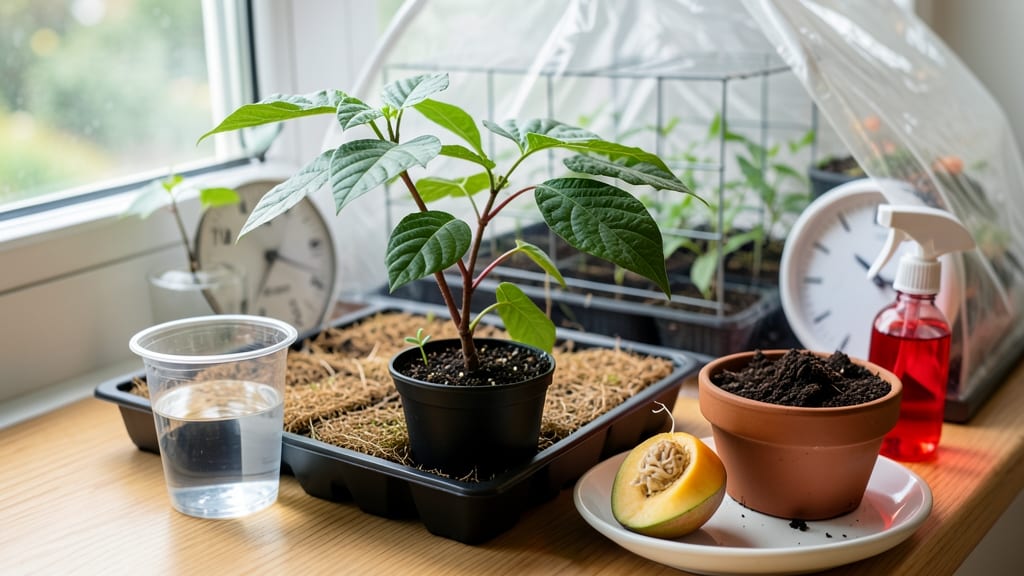
Your mango seed germination time could be as quick as 2-4 weeks—if you mimic the tropical conditions it craves. 🌱 I’ve watched seeds go from rock-hard to tiny green leaves in just three weeks by controlling heat, moisture, and patience.
The key isn’t luck; it’s recreating the warm, humid soil of its native rainforest.
Start with a fresh seed (dried ones take longer), soak it overnight to soften the shell, then plant it ½-inch deep in moist, well-draining potting mix.
Keep the soil warm (75-85°F) and consistently damp—like a wrung-out sponge—not soggy. A clear plastic bag over the pot traps humidity without drowning the seed.
Within 7-14 days, you’ll spot a tiny root breaking through. Once the first leaves appear, move it to bright, indirect light (no direct sun yet).
By week 4, your seedling might hit 2-3 inches tall—ready for its first true leaves, which look nothing like the seedling’s initial spiky ones.
The real magic happens when you transplant at 6-8 inches tall, but don’t rush—wait until roots fill the pot. Fresh seeds germinate faster, but even dried ones can wake up with the right coaxing. Patience pays off: a thriving mango tree starts with that first stubborn sprout.
📚 In This Guide
- What you need
- Instructions
- Tips and common mistakes
- Wrapping up and next steps
What you need
- ● Mango seed: 1 fresh, plump seed (preferably from a ripe, organic mango—avoid treated seeds!)
- ● Paper towels or damp cloth: 2-3 sheets (for pre-sprouting)
- ● Plastic bag or container with a lid: 1 (to maintain humidity)
- ● Small pot (3-4 inches in diameter): 1 (with drainage holes—terracotta or plastic works!)
- ● Well-draining potting mix: 1 bag (use a blend of coconut coir, perlite, and peat moss for best results)
- ● Spray bottle: 1 (for gentle watering)
- ● Scissors or knife: 1 (for seed prep)
- ○ Ruler or measuring tape: 1 (optional, for tracking seed depth)
- ● Grow lights or sunny windowsill: Ensure 6+ hours of indirect light daily.
- ● Humidity dome or clear plastic wrap: Speeds up germination by trapping moisture.
- ● Fertilizer (low-nitrogen, like fish emulsion): 1 small bottle (use sparingly after sprouting).
- ○ Seedling heat mat (optional):** Helps in cooler climates (set to 75–85°F).
How to speed up mango seed germination in 2-4 weeks
Here's the proven method I use to break dormancy and get those stubborn mango seeds sprouting faster than the standard 6-8 weeks.
🌱 Step 1: Extract and Prepare the Seed
Cut open a ripe, organic mango (the riper, the better) and remove the large, flat seed. Rinse it thoroughly under running water to remove any fruit pulp clinging to the surface—this prevents mold growth during germination. I like to use a paper towel to gently scrub away stubborn residue, especially around the edges where moisture gets trapped.
Place the seed in a bowl of warm water for 24-48 hours. This softens the hard outer shell and kickstarts the internal processes. Change the water every 12 hours to prevent bacterial buildup. You'll know it's ready when the seed feels noticeably lighter and the outer shell starts to crack slightly at the edges.
💧 Step 2: Stratify for Faster Germination
After soaking, wrap the seed in a damp paper towel and place it inside a ziplock bag. Seal it loosely—you want airflow but not enough to dry it out. Store the bag in the refrigerator for 7-14 days. This cold stratification mimics the natural winter period tropical seeds experience, breaking dormancy and speeding up germination.
Check the seed every 3-4 days to ensure the paper towel stays moist but not soggy. If it dries out, mist it lightly with water and reseal the bag. After 10-14 days, remove the seed and look for a small crack or the tip of the sprout emerging—this is your signal that germination is imminent.
☀️ Step 3: Plant in Warm, Moist Soil
Fill a 4-inch diameter pot with a mix of 50% potting soil and 50% perlite or sand to improve drainage. Mango seeds rot easily if kept too wet, so this blend prevents waterlogging. Plant the seed 1 inch deep, with the pointed end facing upward—this ensures the sprout grows toward the light.
Water the soil until it's evenly moist but not saturated. Place the pot in a location with constant warmth (75-85°F), like on top of a refrigerator or near a sunny window. Cover the pot with a clear plastic bag to retain humidity, but remove it daily for 10 minutes to prevent mold. You should see the first signs of germination—tiny roots breaking through the soil—in 7-14 days.
🌿 Step 4: Provide Ideal Growing Conditions
Once the seedling emerges, remove the plastic bag completely and move it to a spot with bright, indirect light. Direct sunlight can scorch the delicate young leaves, so I place mine near an east-facing window or under a grow light set to 12-14 hours of light daily. Keep the soil consistently moist—water when the top ½ inch feels dry to the touch—but never let it sit in standing water.
Mango seedlings grow slowly at first, but within 4-6 weeks, you'll see the first true leaves (not the initial seed leaves) appear. This is when the plant starts photosynthesizing on its own. At this stage, you can fertilize lightly with a diluted fish emulsion (5-10-5) to encourage strong root and leaf growth.
⏰ Step 5: Transplant When Ready
After 3-4 months, when the seedling reaches 6-12 inches tall and has a sturdy stem, it's time to transplant into a larger pot. Choose a 6-inch diameter container with drainage holes and fill it with well-draining potting mix. Dig a hole twice as wide as the seedling's root ball and place it in, firming the soil gently around the base.
Water thoroughly after transplanting and place the pot in a sunny, sheltered spot for the first week to help it adjust. Mango trees are tropical and need warmth year-round, so if you live in a cold climate, keep it indoors near a sunny window or under grow lights. With patience, your seedling will grow into a small tree capable of producing fruit in 3-5 years.
Tips & tricks for speeding up mango seed germination
Real talk: The difference between a seed that sprouts in weeks versus months often comes down to these small but critical details.
Soaking Success: In Step 1, the 24-48 hour warm water soak is non-negotiable for breaking dormancy. I've seen seeds that skipped this step take twice as long to crack open. Use room temperature water—not hot—since extreme heat can damage the embryo inside. The 12-hour water changes are crucial too; stagnant water breeds bacteria that can rot your seed before it even sprouts.
Stratification Strategy: The 7-14 days in the fridge during Step 2 mimics tropical winter conditions. Don't rush this—some seeds need the full two weeks to fully break dormancy. I keep a small notebook by my fridge door to track which seeds I've stratified and when, since forgetting this step is how I lost my first batch. The damp paper towel should feel like a wrung-out sponge; if it's dry, your seed won't germinate.
Planting Precision: When you plant that 1-inch-deep seed in Step 3, orientation matters. The pointed end should always face upward—this is where the sprout will emerge. I've had seeds planted upside-down take months to show any sign of life. The 50/50 soil-perlite mix is worth repeating: Too much soil suffocates roots, while too much perlite dries out the seed. Aim for that perfect "damp but not soggy" texture when you press the mix between your fingers.
Lighting Logic: That bright indirect light in Step 4 is a balancing act. I use a simple grow light on a timer set to 12-14 hours daily because natural light varies too much. Watch for the first true leaves—these look different from the initial seed leaves and signal your plant is ready for its first diluted fertilizer. Too much direct sun at this stage will scorch those delicate leaves before they even develop properly.
Pro Tips for Mango Seed Germination Time
- Real talk: The difference between a seed that sprouts in weeks versus months often comes down to these small but critical details.
- Soaking Success: In Step 1, the 24-48 hour warm water soak is non-negotiable for breaking dormancy.
- Stratification Strategy: The 7-14 days in the fridge during Step 2 mimics tropical winter conditions.
Frequently asked questions
Got questions about germinating mango seeds?
Here are answers to the most common ones to help you succeed!
How long does it really take for a mango seed to germinate?
A mango seed typically germinates in 2–4 weeks, but factors like temperature, moisture, and seed freshness can speed it up or slow it down. Some seeds sprout in just 7–10 days if kept warm (70–85°F) and consistently damp. Patience is key—don’t give up after a week!
What can I do to speed up mango seed germination?
To fast-track germination, try these tricks:
- Soak the seed in warm water for 24–48 hours before planting.
- Use a heating mat or place the pot near a sunny window.
- Keep the soil consistently moist (not soggy) with a humidity dome.
- Try sandpaper to lightly scratch the seed coat if it’s hard.
Why isn’t my mango seed germinating after 3 weeks?
If your seed isn’t sprouting, check these common issues:
- Dormancy: Some seeds need a longer rest—try stratification (cool, moist storage for 2–4 weeks).
- Improper moisture: Too dry? Too wet? Aim for damp, not drenched soil.
- Low temperatures: Mango seeds love warmth—keep them above 65°F (18°C).
- Old or damaged seed: If the seed is cracked or shriveled, it may not sprout.
Can I grow a mango tree from a store-bought mango seed?
Yes! Store-bought mango seeds work, but the tree may not produce fruit true to the parent variety (it could be wild-type). For better results, use seeds from organic, heirloom, or locally grown mangoes. If you’re impatient, consider grafting later for faster fruiting!
What if my mango seed sprouts but the seedling dies?
Young mango seedlings are fragile—here’s how to keep them alive:
- Use a well-draining mix (50% potting soil + 50% perlite/sand).
- Avoid direct sunlight at first (start with bright, indirect light).
- Water gently at the base—don’t drown the roots!
- Transplant only when the seedling has 2–3 true leaves and is sturdy.
Wrapping up and next steps
Germinating a mango seed takes patience, but with the right techniques—like soaking, warm conditions, and consistent moisture—you can see sprouts in just 2-4 weeks.
Remember, every seed is unique, so don’t rush the process; let nature do its magic! 🌱 Once your seedling is thriving, the next exciting step is transplanting it into soil and nurturing it into a full-grown mango tree. Happy growing!
- Pro tip: Keep a germination journal to track progress—it’s rewarding to watch those tiny roots grow!