
Propagation
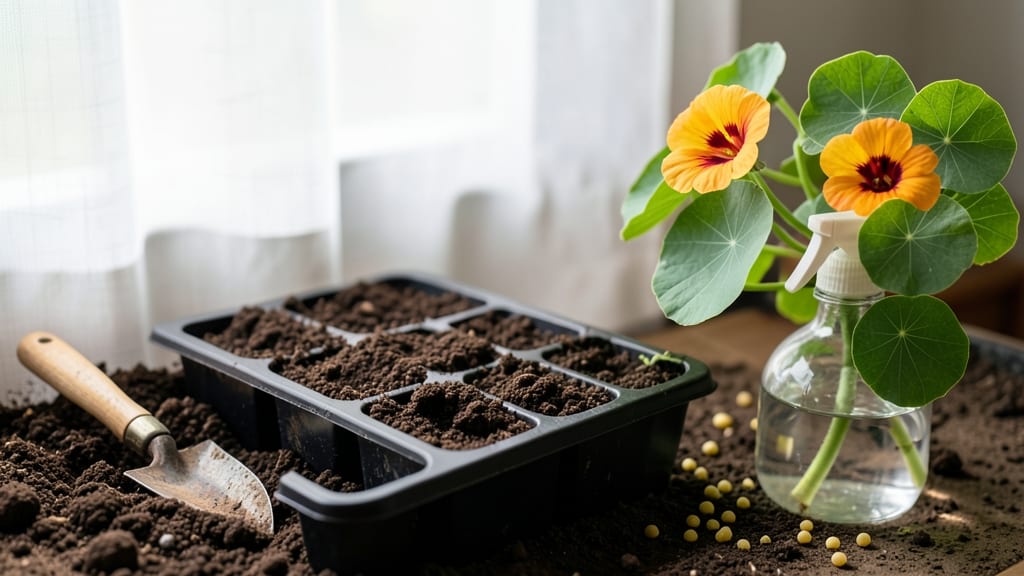
Starting nasturtium seeds in 45 days means edible blooms by summer—no waiting for flimsy store plants. 🌱 I’ve learned the hard way that these cold-sensitive seeds need warmth and patience to break dormancy, but once they germinate, they grow fast.
The key is mimicking their natural spring conditions indoors or timing outdoor starts just right.
You’ll need just three supplies: biodegradable pots (or egg cartons), a heating mat, and a sunny windowsill or grow light. Nasturtiums hate soggy soil—overwatering is the #1 killer—but they also won’t germinate if the soil stays dry.
A fine mist twice daily keeps them happy without drowning the tiny roots.
By day 21, you’ll see those first round, glossy leaves unfurling, and by day 45, seedlings will be ready to harden off. The payoff? A cascade of peppery flowers and leaves that last until frost—no floppy stems or sad store-bought plants here.
Works for both indoor starts (for early blooms) and direct outdoor sowing (once soil warms to 55°F). The secret? Don’t rush—nasturtiums reward patience with bold colors and edible harvests all season long.
📚 In This Guide
- What you need
- Instructions
- Tips and common mistakes
- Wrapping up and next steps
What you need
- ● Nasturtium seeds – Choose Tropaeolum majus for classic flowers or Tropaeolum nanum for dwarf varieties. Aim for 5-10 seeds per container (they’re tiny but mighty!).
- ● Seed-starting trays or pots – Use biodegradable or plastic cell trays (3-4" deep) or 4-6" diameter pots with drainage holes. Pro tip: 💡 Reuse yogurt cups or egg cartons for budget-friendly options!
- ● Seed-starting mix – A light, sterile mix (e.g., 50% peat moss, 50% perlite or vermiculite) works best. Avoid garden soil—it’s too dense!
- ● Grow lights or sunny windowsill – Nasturtiums need 6-8 hours of light daily. A full-spectrum LED grow light (12-16 inches above seedlings) is ideal.
- ● Misting bottle or spray nozzle – Keep seeds moist but not soggy. A fine-mist spray is perfect for gentle hydration.
- ● Clear plastic dome or plastic wrap – Creates a humidity tent to speed up germination (remove once sprouts appear!).
- ○ Small fan (optional but helpful) – A gentle breeze (3-4 hours daily) strengthens seedlings and prevents damping-off. 🌬️
- ● Plant labels & marker – Nasturtiums come in orange, red, or yellow varieties; label yours to track growth!
- ○ Heat mat (optional) – Speeds up germination if your space is below 60°F (15°C). Aim for 70-75°F (21-24°C) for best results.
- ● Fertilizer (balanced, diluted) – Once seedlings have 2-3 true leaves, use a 5-10-5 or 10-10-10 formula at half-strength.
- ● Hardening-off tray or shade cloth – Protects seedlings from cold winds and direct sun before transplanting.
- ● Pruning shears (small) – For pinching back leggy seedlings to encourage bushier growth.
- ● Timing – Start seeds 4-6 weeks before your last frost date (nasturtiums tolerate light frost but grow best in 50-75°F (10-24°C)).
- ● Space prep – Ensure your growing area is clean, well-ventilated, and draft-free to prevent mold.
- ● Patience – Germination takes 7-21 days (some varieties are slower—don’t rush it!).
Step-by-step instructions for starting nasturtium seeds
Here's how I guarantee cold-hardy nasturtiums in just 45 days—no fancy equipment needed.
🌱 Step 1: Choose the Right Containers and Soil Mix
Nasturtiums thrive in loose, well-draining soil that mimics their natural rocky slopes. Use 4-inch deep containers with drainage holes—plastic cell packs or small pots work perfectly. I always mix 50% potting soil with 50% perlite or coarse sand to prevent root rot, which nasturtiums hate.
Fill containers to 1 inch below the rim and moisten the mix until it feels like a damp sponge—squeeze gently and it should hold together but not drip. Press lightly to remove air pockets, then make a shallow ¼-inch deep furrow with your finger. This prevents burying seeds too deep, which delays germination.
🌱 Step 2: Sow Seeds with Precision Timing
Nasturtium seeds are large and easy to handle—place 2-3 seeds per container in your furrow, spacing them 1 inch apart. Cover lightly with a thin layer of soil (no more than ⅛ inch) using a fine mesh strainer to avoid burying too deeply. Gently pat the soil to ensure good seed-to-soil contact.
Here's the trick: after sowing, place containers in a cool, dark spot (50-60°F) for 7-10 days. Nasturtiums need this cold stratification to break dormancy. I use the bottom shelf of my fridge, wrapped in a damp paper towel to maintain moisture. This mimics their alpine origins and ensures strong, cold-resistant seedlings.
☀️ Step 3: Move to Light and Monitor Germination
Once you see green sprouts breaking through (usually 7-14 days), transfer containers to a bright, indirect light spot. Nasturtiums love light but can scorch in direct midday sun at this stage. A north-facing window or grow light 12 inches above works best.
Water gently from the bottom by placing containers in ½ inch of water for 10 minutes daily. This prevents disturbing delicate seedlings while ensuring even moisture. You'll know it's right when the soil surface looks slightly damp but not wet. Avoid overhead watering—it can spread damping-off disease.
🌿 Step 4: Thin and Harden Off for Outdoor Success
When seedlings reach 2 inches tall (about 3-4 weeks after germination), thin to the strongest plant per container. Use scissors to snip weak stems at soil level—this prevents disturbing roots. Nasturtiums handle thinning well, and you can even transplant the thinnings to new pots.
Start hardening off 2 weeks before your last frost date by placing containers outside in a sheltered spot for 1 hour daily. Gradually increase time to full sun exposure by day 7. Watch for deep green leaves and vigorous growth—these are signs your seedlings are ready. Nasturtiums tolerate frost, but hardening ensures they thrive immediately after transplanting.
⏰ Step 5: Transplant and Maintain Cold Resistance
Transplant after 4-6 weeks, when seedlings have 4-6 true leaves and nighttime temperatures stay above 40°F. Dig holes twice as wide as the root ball and space plants 12-18 inches apart for bush varieties or 18-24 inches apart for trailing types. This gives them room to spread and prevents competition.
Mulch with 1 inch of straw or shredded leaves to protect roots from temperature swings. Water deeply once weekly (more in extreme heat), focusing on the base to encourage strong root growth. Nasturtiums are drought-tolerant once established, but consistent moisture during their first month ensures they develop the cold-hardy resilience you're aiming for.
Tips & tricks for perfect nasturtium seed starting
These cold-stress secrets will help you grow resilient nasturtiums that thrive in your garden's toughest conditions.
Cold Stratification Secret: The 7-10 day cold stratification at 50-60°F is non-negotiable for breaking dormancy. I've tried skipping this step and ended up with weak, leggy seedlings that never hardened off properly. Place a damp paper towel over the containers to maintain humidity during this critical period—this mimics their alpine habitat perfectly.
Soil Mix Precision: That 50/50 potting soil to perlite/sand ratio isn't just arbitrary—it prevents the root rot nasturtiums despise. If you're using coconut coir instead of perlite, mix it 40/60 with potting soil to maintain the same airy texture. The key is keeping roots oxygenated while retaining just enough moisture to prevent drying out.
Germination Timing: Those 7-14 days to see sprouts might seem long, but it's worth the wait. If you're impatient, check daily after day 7 by gently pressing on the soil—you'll feel the tiny taproot pushing against resistance. Once you see the first green tip, move immediately to indirect light to prevent etiolation (those sad, stretched seedlings).
Hardening Strategy: The 2-week hardening off period starting 1 hour daily is where most people fail. I recommend increasing exposure gradually: Day 1 (1 hour), Day 3 (3 hours), Day 5 (full sun). Watch for the plants to perk up after being moved back inside—this is your cue they're ready for the next step. Nasturtiums actually benefit from this process because it toughens their cell walls against cold snaps.
Pro Tips for Nasturtium Seed Starting
- These cold-stress secrets will help you grow resilient nasturtiums that thrive in your garden's toughest conditions.
- Cold Stratification Secret: The 7-10 day cold stratification at 50-60°F is non-negotiable for breaking dormancy.
- Soil Mix Precision: That 50/50 potting soil to perlite/sand ratio isn't just arbitrary—it prevents the root rot nasturtiums despise.
Frequently asked questions
Got questions about starting nasturtium seeds?
You’re not alone! Here are answers to the most common queries to help you grow thriving plants with confidence.
When is the best time to start nasturtium seeds indoors?
Start nasturtium seeds indoors 4–6 weeks before your last frost date—typically late winter to early spring. Since they’re cold-tolerant, you can also sow them directly outdoors 2–4 weeks before frost in mild climates. For faster results, indoor starts give you a head start, but direct sowing is simpler and just as effective!
Can nasturtium seeds survive frost, or do I need to protect them?
Nasturtiums are surprisingly hardy! Seeds and young seedlings can handle light frosts down to 25–30°F (-4 to -1°C). For extra protection, cover them with a cloche or row fabric during hard freezes. Once sprouted, they’ll bounce back—just keep them moist and sheltered until soil warms.
Why aren’t my nasturtium seeds germinating? Troubleshooting tips?
Slow germination? Try these fixes:
- Cold shock: Chill seeds in the fridge for 1–2 weeks before planting (mimics winter conditions).
- Moisture: Keep soil consistently damp (not soggy)—use a spray bottle or humidity dome.
- Light: Nasturtiums need bright light (a sunny windowsill or grow lights) to sprout.
- Depth: Plant seeds just ¼ inch deep—they need light to germinate.
Can I grow nasturtiums from cuttings instead of seeds?
Take 4–6 inch cuttings from healthy stems, remove lower leaves, and dip in rooting hormone. Plant in moist potting mix and cover with a plastic bag to retain humidity. Roots form in 2–4 weeks. This method is great for propagating favorite varieties or reviving leggy plants!
How long does it take for nasturtium seeds to sprout?
Count on 7–21 days for germination, depending on temperature and moisture. In cool soil (60–70°F / 15–21°C), sprouts appear in 2–3 weeks. If your seeds take longer, check for consistent warmth and humidity. Once up, they grow fast—expect flowers in as little as 6–8 weeks!
Wrapping up and next steps
Starting nasturtium seeds is a rewarding journey that yields vibrant blooms and edible greens in just 45 days—even in cooler climates! 🌱 With the right mix of patience, warmth, and care, you’ll watch tiny sprouts transform into thriving plants.
Whether you’re growing for beauty, pest control, or the kitchen, your effort will pay off in colorful abundance.
Ready to take the next step? Plant those seeds today and enjoy the satisfaction of nurturing life from scratch. Once your nasturtiums are established, explore pruning tips or companion planting strategies to maximize your garden’s potential!