
Lawn
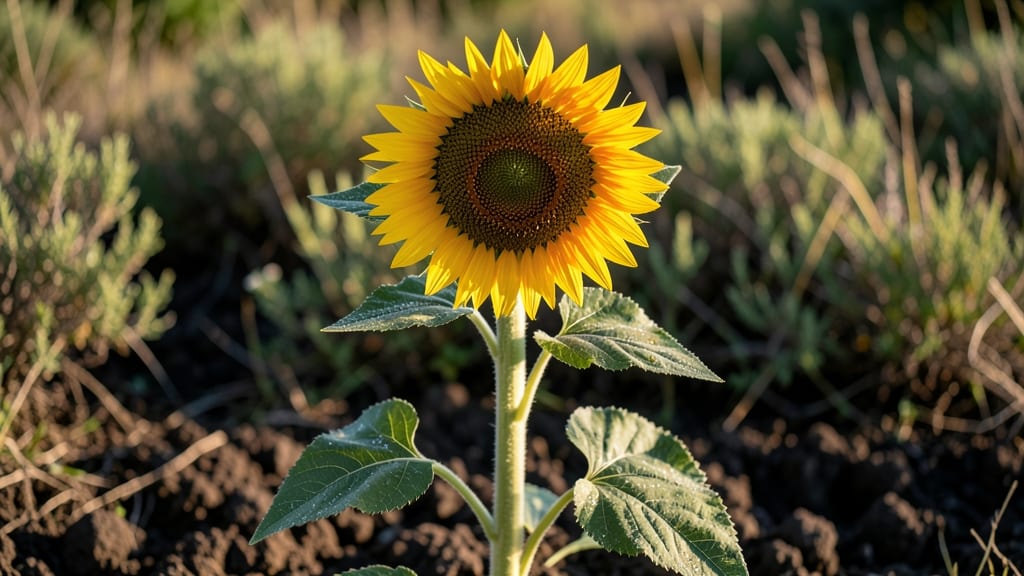
Identifying sunflower seeds before planting saves you from guessing which sunflower seed identification chart varieties will thrive in your space. 🌻 I’ve spent years growing everything from towering Mammoths to compact Sunspots, and the differences in seed size, shape, and color directly impact height, bloom time, and even edibility.
A single glance at a seed can tell you whether you’re planting a 12-foot giant or a 3-foot pollinator magnet—no labels needed.
Start by noting three key traits: seed size (tiny Sunspot seeds vs. large Mammoth seeds), shape (round vs. elongated), and color (black, striped, or white). Mammoth varieties have plump, dark seeds that grow into 10-foot stalks, while Teddy Bear types show smaller, lighter seeds perfect for cut flowers.
Even the striped seeds of 'Autumn Beauty' hint at its vibrant, multi-colored blooms—no chart required, just observation.
Once you recognize these patterns, you’ll match seeds to your garden’s needs: tall varieties for privacy screens, dwarf types for containers, or oil-rich seeds for bird feeders. My 3-foot Sunspot seeds now go straight into patio pots, while Mammoth seeds get the full sun and space they demand.
The right seed means fewer surprises and more satisfaction when those golden faces turn toward the sun.
For a foolproof system, snap photos of your seeds next to a ruler and compare them to trusted varieties online. Over time, you’ll develop an eye for what grows best in your climate—whether that’s heat-tolerant Russian Mammoths or early-blooming 'ProCut' seeds for fresh bouquets.
The more you grow, the more the seeds themselves become your garden’s storybook.
📚 In This Guide
- What you need
- Instructions
- Tips and common mistakes
- Wrapping up and next steps
What you need
- ● Sunflower seeds (varied types) – 30-50 seeds (mix of common varieties like Russian Mammoth, Teddy Bear, and Sunspot for diversity).
- ● Magnifying glass – 2x-5x magnification (for examining seed details like texture, size, and markings).
- ● Ruler or calipers – Measuring tape or digital calipers (precision: 0.01 inches/mm for accurate size records).
- ● White or light-colored poster board – 18"x24" sheet (for the chart background; avoid dark colors that obscure details).
- ● Fine-tip markers – Black, brown, and gray (for labeling and shading; Copic or Sharpie work well).
- ● Printed reference images – High-resolution photos of sunflower seed varieties (from reliable sources like Seed Savers Exchange or USDA databases).
- ● Adhesive (double-sided tape or glue stick) – Acid-free for longevity (avoid liquid glue that may bleed).
- ● Pencil and eraser – For sketching seed outlines before finalizing the chart.
- ● Digital camera with macro lens – For high-res seed photos (use natural light to avoid color distortion).
- ● Seed tray or small containers – To organize seeds by variety during identification.
- ● Colored pencils or watercolors – For adding artistic details (e.g., seed patterns or plant silhouettes).
- ● Laminator or clear plastic sleeves – To protect the finished chart from wear (great for classrooms!).
- ● Field guide or seed catalog – As a backup reference for tricky identifications.
How to identify sunflower seed varieties by visual traits
Sunflowers aren't all the same—here's how to tell them apart by leaf shape, stem thickness, and flower size.
🌱 Step 1: Examine Flower Head Shape and Size
Start with the most obvious trait: the flower head. Giant sunflowers (like 'Russian Giant') grow 12-16 inches wide with deep yellow petals and dark brown centers. Their petals are broad and slightly curved at the tips, almost like a child's hand with fingers spread wide.
Dwarf varieties (such as 'Teddy Bear') stay under 6 inches tall with 4-6 inch flower heads. Their petals are tighter together, often with double rows that give them a fluffy appearance. Confetti sunflowers have mixed colors—white, red, or yellow petals—with smaller heads (3-5 inches) that resemble a colorful pom-pom.
🌿 Step 2: Check Leaf Shape and Arrangement
Look at the leaves to narrow it down further. Single-stem varieties (like 'Autumn Beauty') have large, rough, lance-shaped leaves that grow alternately along the stem. These leaves are 3-6 inches long, with prominent veins and a slightly hairy texture—run your fingers over them to feel the roughness.
Branching types (such as 'Moulin Rouge') develop multiple stems from the base, each with smaller, narrower leaves (2-4 inches) that grow in a spiral pattern. Their foliage looks more delicate, almost fern-like, compared to the bold leaves of single-stem varieties. Pro tip: If you see a sunflower with more than one flower head, it’s almost always a branching type.
☀️ Step 3: Assess Stem Thickness and Height
Grab the stem to feel its thickness—this tells you a lot. Tall varieties (like 'Mammoth') have thick, sturdy stems (1-2 inches in diameter) that can support 10-12 feet of height. Their stems feel wooden and rigid even when young, almost like a small sapling.
Dwarf or bush varieties (like 'Sunspot') have slender stems (½ inch or less) that rarely exceed 3-5 feet. These stems bend easily if you press them—ideal for container growing. Half-hardy types (such as 'ProCut') have medium stems (¾ inch) and grow 5-7 feet tall, perfect for cutting gardens.
💧 Step 4: Observe Seed Head Characteristics
Once the flower fades, the seed head becomes your best clue. Oilseed varieties (like 'NuSun') produce small, disk-shaped seeds (½ inch) packed tightly in a flat, circular head. These seeds are grayish-black and smooth, often used for bird feed or cooking oil.
Confectionery sunflowers (such as 'Russian Giant') have large, striped seeds (¾ inch) with white, black, or gray stripes. Their seed heads are bulbous and rounded, not flat, and the seeds are crunchy when roasted. Bird-friendly varieties (like 'Autumn Beauty') have tiny, black seeds in a dense, spherical head—perfect for attracting finches and chickadees.
✂️ Step 5: Note Growth Habit and Branching Pattern
Watch how the plant grows over time. Single-stem types (like 'Serenity') send up one main stalk with no side branches, making them easy to spot in a garden. Their growth is vertical and unbroken, like a single stalk of bamboo.
Branching varieties (such as 'Moulin Rouge') develop multiple stems from the base, creating a bushy, multi-flower display. These types often rebloom if deadheaded, producing secondary flowers throughout the season. Pro tip: If you see a sunflower with more than one bloom, it’s almost always a branching type—great for cut flowers or pollinators.
Tips & tricks for mastering sunflower seed identification
Sunflower identification gets easier when you know what to look for—and what to watch out for. Here's how to sharpen your skills.
Use a Reference Chart: Print or bookmark this guide and take it with you when you're out in the garden. Sunflowers look so different up close that having the visual traits right in front of you makes all the difference. I keep mine in a waterproof sleeve so I can reference it during rain or when checking plants in the field.
Compare Multiple Traits: Never rely on just one characteristic to identify a sunflower. For example, a 'Russian Giant' might have large seeds, but you should also confirm its 12-16 inch flower head and thick stem. I've seen small-seeded varieties with unexpectedly large heads—always cross-check with at least two traits from different steps.
Check Seed Heads at Different Stages: The seed head characteristics in Step 4 only become visible after the flower fades. If you're trying to identify plants early in the season, focus on flower head size and leaf shape instead. I like to mark plants with colored flags when I first notice them, then revisit them after flowering to confirm the seed type.
Note Growth Habits Over Time: Some sunflowers change their appearance as they mature. For instance, 'Moulin Rouge' might start with a single stem but develop multiple branches later. Keep a small notebook nearby to jot down observations about how each plant develops throughout the season.
Pro Tips for Sunflower Seed Identification Chart
- Sunflower identification gets easier when you know what to look for—and what to watch out for.
- Use a Reference Chart: Print or bookmark this guide and take it with you when you're out in the garden.
- Compare Multiple Traits: Never rely on just one characteristic to identify a sunflower.
Frequently asked questions
Got questions about identifying sunflower seeds? You’re not alone! Here are answers to the most common queries to help you navigate your seed collection with confidence.
How do I tell the difference between edible and bird sunflower seeds?
Edible sunflower seeds (like Helianthus annuus) are typically larger, striped, and have a black-and-white shell. Bird seeds (often Nyjer or black oil varieties) are smaller, uniformly dark, and lack the bold stripes. Always check seed packaging for labels—when in doubt, assume non-edible unless confirmed!
When is the best time to harvest sunflower seeds for identification?
Harvest seeds when the sunflower heads turn golden-brown and the back of the seed is fully dry (usually late summer to early fall). Wait until the petals drop and the seed heads feel lightweight—this ensures they’re mature but not overripe. Morning harvests prevent dew-related mold, and leave a few heads on the stem for birds if you’re okay with sharing!
Can I use a sunflower seed identification chart if I only have a few seeds?
Focus on key traits like shell color, size, and stripe patterns. If seeds are mixed, sort them into groups (e.g., striped vs. solid) and compare to the chart. For tricky cases, take a photo and zoom in on details—many charts include close-up examples. Pro tip: Seed weight can also help—edible seeds are often heavier due to their oil content.
What if my sunflower seeds don’t match any variety on the chart?
Some seeds may be hybrids, heirloom varieties, or regional strains not listed. Try cross-referencing with seed databases (like the Seed Savers Exchange) or local gardening forums. If all else fails, plant them! Observing growth patterns (leaf shape, stem height) can reveal clues. Mistakes happen—even experts start somewhere!
Are there sunflower seeds that are toxic to pets or wildlife?
Most sunflower seeds are safe, but avoid treated seeds (often dyed or coated with pesticides). Birds and small mammals love them, but choking hazards exist for tiny pets—always supervise. If you’re unsure, opt for orgainc-certified seeds. For wildlife, leave some heads unharvested; they’re a natural snack for squirrels, finches, and more!
Wrapping up and next steps
Mastering sunflower seed identification opens up a world of gardening possibilities—whether you're cultivating for beauty, wildlife, or harvest! 🌻 With this visual guide, you’ve learned to spot key traits like leaf shape, stem structure, and seed color, ensuring you pick the perfect variety for your space.
Now, take that knowledge and plant with confidence—start small with a few seeds or go big with a full garden. Happy growing!