
Lawn
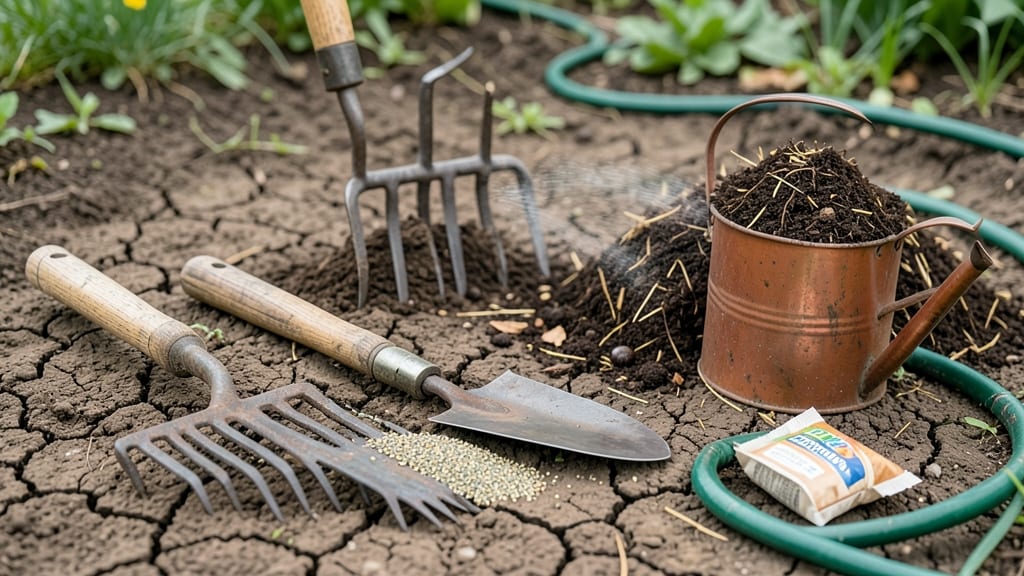
Planting grass seed on hard dirt feels like trying to grow flowers on concrete—until you know the tricks. 🌱 I’ve turned stubborn, packed soil into lush lawns by breaking through compaction the right way, and you can too.
The secret isn’t brute force but smart prep: loosening the soil, adding organic matter, and ensuring seeds make real contact with the earth.
You’ll need a few key tools: a core aerator or spade to punch holes, compost or peat moss to improve texture, and a stiff broom to spread seeds evenly.
Skipping these steps means seeds just sit on top, starving for moisture and soil connection. My first attempt without aeration left bare patches—until I learned better.
Once prepped, you’ll see those first green shoots within 7-14 days, depending on your grass type. The real payoff? A lawn that stays resilient through droughts and foot traffic, not one that turns to dust at the first dry spell.
This method works for new lawns or patchy areas—just adapt the scale.
Fair warning: compacted soil fights back, but persistence wins. Start small if your yard is huge, and always water gently to avoid washing seeds away. You’ve got this—your future lawn is waiting just below that hard surface.
📚 In This Guide
- What you need
- Instructions
- Tips and common mistakes
- Wrapping up and next steps
What you need
- ● Grass seed: Choose a high-quality seed blend suited to your climate and lawn needs (e.g., Kentucky Bluegrass, Fescue, or Bermuda). Aim for 10–20 lbs per 1,000 sq ft, depending on the seed type.
- ● Garden fork or broadfork: A heavy-duty, 12–18-inch tine fork to break up compacted soil (rent or buy—this is the MVP!).
- ● Rake (bow or leaf rake): A 12–18-inch metal rake with sturdy tines to level and smooth the soil after loosening.
- ● Garden hose with nozzle: A soaker hose or adjustable spray nozzle for deep watering (critical for seed germination!).
- ● Compost or topsoil: A 1–2-inch layer of organic matter (compost, peat moss, or topsoil) to improve soil structure and nutrients.
- ○ Lawn roller (optional but helpful): A lightweight roller (50–100 lbs) to press seed into the soil for better contact.
- ● Mulch or straw: ¼-inch layer of straw or specialty grass seed mulch to retain moisture and protect seeds from birds.
- ● Gloves and knee pads: Protect your hands and knees—gardening gloves and knee pads make the job way more comfortable!
- ● Soil test kit: Check pH and nutrient levels (ideal pH for grass: 6.0–7.5). Adjust with lime or sulfur if needed.
- ● Starter fertilizer: A low-nitrogen, high-phosphorus blend (e.g., 10-20-10 ratio) to boost root growth.
- ● Seed spreader: A broadcast or drop spreader for even seed distribution (manual or push-style).
- ● Weed barrier fabric: If your area has persistent weeds, lay down landscape fabric before seeding.
- ● Post-emergent herbicide (for later): Only use after grass is established to avoid killing new seedlings.
Step-by-step instructions for planting grass seed on hard dirt
Here's how to transform tough, compacted soil into a perfect seedbed—no heavy equipment needed.
🪴 Step 1: Break Up the Soil with the Right Tools
Start by renting or borrowing a hand-held soil aerator or broadfork—these tools let you work in sections without tearing up your whole yard. Push the tines 6-8 inches deep into the soil, then rock them back and forth to loosen the compacted layer. If the dirt resists, step on the fork handles to add leverage. You'll hear a satisfying crack as the hardpan breaks apart.
Work in 4-foot squares to avoid overworking the soil. For stubborn areas, use a shovel to slice vertical cuts every 12 inches, then pry up sections. The goal is to create a spongy, crumbly texture—like cake batter, not concrete. If you're working on a slope, start from the bottom to prevent soil from sliding back into place.
🌱 Step 2: Remove Debris and Level the Ground
Rake away all rocks, roots, and dead vegetation using a bow rake with ½-inch tines. Pay special attention to the edges of your work area—hidden debris can create uneven seed contact. Once clear, drag the rake in straight lines to level the soil. You want a smooth, undulating surface (like a gentle wave) to help water drain evenly.
For low spots, add a thin layer of topsoil (no more than ½ inch) and rake smooth. High spots can stay as-is—they'll settle naturally after watering. Run your hand over the soil to check for smoothness. If you feel bumps larger than ¼ inch, rake them down. This step prevents water pooling, which drowns seeds.
💧 Step 3: Add Organic Matter for Better Seed Contact
Spread a ¼-inch layer of compost or peat moss over the prepared soil using a drop spreader. This layer softens the remaining hardpan while providing nutrients. Work it into the top ½ inch of soil with a garden rake—just enough to mix, not till. The compost will also help retain moisture, which is critical for germination.
For sandy soils, mix in ½ inch of peat moss to improve water retention. In clay-heavy areas, add ½ inch of coarse sand to prevent compaction. Lightly rake the surface again to create a fine, dust-like texture. This ensures seeds make direct contact with the soil, which is essential for consistent germination. Avoid walking on the area after this step—your footprints will create depressions.
☀️ Step 4: Spread Seed Evenly and Lightly Cover
Use a broadcast spreader to distribute grass seed at the rate recommended on the package (typically 4-8 pounds per 1,000 sq ft). Walk in straight lines, overlapping slightly to avoid bare spots. For small areas, use a hand spreader or sow seeds by hand, spacing them ¼ inch apart. Lightly rake the seed into the soil with a fine-toothed rake, covering it with just ¼ inch of soil or compost.
This light covering protects seeds from drying out and birds, while still allowing sunlight to penetrate. If you're seeding in hot, dry weather, cover with straw mulch instead—it insulates seeds from temperature swings. Water immediately after sowing to settle the seed into place. You'll know you've done it right when the soil looks uniformly textured, with no visible seed clusters.
⏰ Step 5: Water and Maintain Moisture for Germination
Water the seeded area gently but thoroughly, using a fine-mist sprinkler or soaker hose. Keep the soil evenly moist (like a wrung-out sponge) for the first 2-3 weeks. Check daily—if the top ½ inch feels dry, water again. Overhead watering is fine at this stage, but avoid creating puddles. For best results, water early in the morning to reduce evaporation.
Once seedlings reach 2 inches tall, reduce watering to 1-2 times per week (about ½ inch per week). This prevents disease and encourages deep root growth. Avoid walking on the lawn until the grass reaches 3 inches tall—your footprints will leave permanent marks. If weeds sprout, pull them by hand before they compete with your grass for water and nutrients.
Tips & tricks for planting grass seed on hard dirt
These practical tips will help you transform even the toughest compacted soil into a thriving lawn—without the frustration.
Tool Selection: If you don't have a broadfork or aerator, try renting a manual core aerator from your local hardware store. These tools create small holes that break up the hardpan while also improving water and air circulation. For very small areas, a garden fork works in a pinch—just push it in and wiggle it side to side like you're loosening a stubborn cork. The key is working the soil 6-8 inches deep to reach the compacted layer beneath the surface.
Soil Texture Test: Before adding compost, do this simple test: Grab a handful of your prepared soil and squeeze it. If it crumbles easily when you open your hand, you're ready for seeds. If it stays in a tight ball, you need to work in more organic matter. For clay-heavy soils, mix in the ½ inch of coarse sand mentioned in Step 3—this creates tiny air pockets that help roots penetrate. The goal is soil that feels like damp sandpaper, not wet cement.
Watering Strategy: During those critical first 2-3 weeks of germination, I recommend setting up a simple watering schedule: Use a timer on your sprinkler for 10 minutes every morning at 6 AM. This consistent moisture is more important than perfect amounts—seeds need to stay damp like a wrung-out sponge. If you're using a soaker hose, lay it in a zig-zag pattern to ensure even coverage across your entire seeded area. Pro tip: Place a white plastic plate on the soil where seeds are planted—when the water just starts to run off, that's your cue to stop.
Weed Prevention: The best time to tackle weeds is before they sprout! After seeding but before germination (about 5-7 days), spread a thin layer of cardboard or newspaper over the seeded area, then top with straw mulch. This blocks sunlight that weeds need to germinate while still allowing water and air to reach your grass seeds. Remove the cardboard once you see green shoots emerging—usually around 2 weeks after planting. This method saves hours of hand-pulling later.
Pro Tips for Plant Grass Seed On Hard Dirt
- These practical tips will help you transform even the toughest compacted soil into a thriving lawn—without the frustration.
- Tool Selection: If you don't have a broadfork or aerator, try renting a manual core aerator from your local hardware store.
- Soil Texture Test: Before adding compost, do this simple test: Grab a handful of your prepared soil and squeeze it.
Frequently asked questions
Got questions?
Planting grass seed on hard dirt can feel tricky—here are answers to the most common concerns to help you succeed!
How do I know if my dirt is too hard for grass seed?
If your soil feels like concrete when pressed or water pools instead of soaking in, it’s likely compacted. Test it by pushing a screwdriver in—if it won’t go past 1 inch, your soil needs loosening. Compacted soil blocks roots, so breaking it up is key before seeding.
Can I plant grass seed in hard dirt without tilling?
While tilling is ideal, you can still plant seed on hard dirt using core aeration or a spading fork to create small holes. For extreme compactness, try a broadfork to lift and loosen soil in sections. Just rake seeds into the surface afterward for best results.
What’s the best time of year to plant grass seed on hard ground?
Cool-season grasses (like fescue or rye) thrive in early fall or late spring when temps are 60–75°F. Warm-season grasses (like Bermuda or Zoysia) prefer late spring to early summer. Avoid extreme heat or frost—both stress seedlings.
How often should I water grass seed on hard dirt?
Keep soil consistently moist (not soggy) for the first 2–3 weeks. Water lightly 2x daily (morning/evening) to prevent crusting. Once sprouts appear, gradually reduce to 1 inch per week. A sprinkler with fine mist works best for hard-packed soil.
Why isn’t my grass seed growing on hard dirt?
Common culprits:
- Poor soil contact: Seeds need to touch loose soil—rake again if they’re on top.
- Lack of sunlight: Shady spots slow growth; choose shade-tolerant seed if needed.
- Compaction: Use a lawn roller lightly after seeding to press seeds into soil.
- Weeds: Pre-treat with vinegar or a natural herbicide before planting.
Wrapping up and next steps
Planting grass seed on hard dirt is totally doable—you’ve got this! 🌱 By breaking up the soil, amending it with organic matter, and keeping your new lawn well-watered, you’re on your way to a lush, green space. Remember, patience and consistency are key as your grass establishes itself.
Now that you’re ready to take action, grab your tools and start transforming that tough dirt into a thriving lawn. Need extra tips? Check out our guide on maintaining new grass for long-term success!