
Size
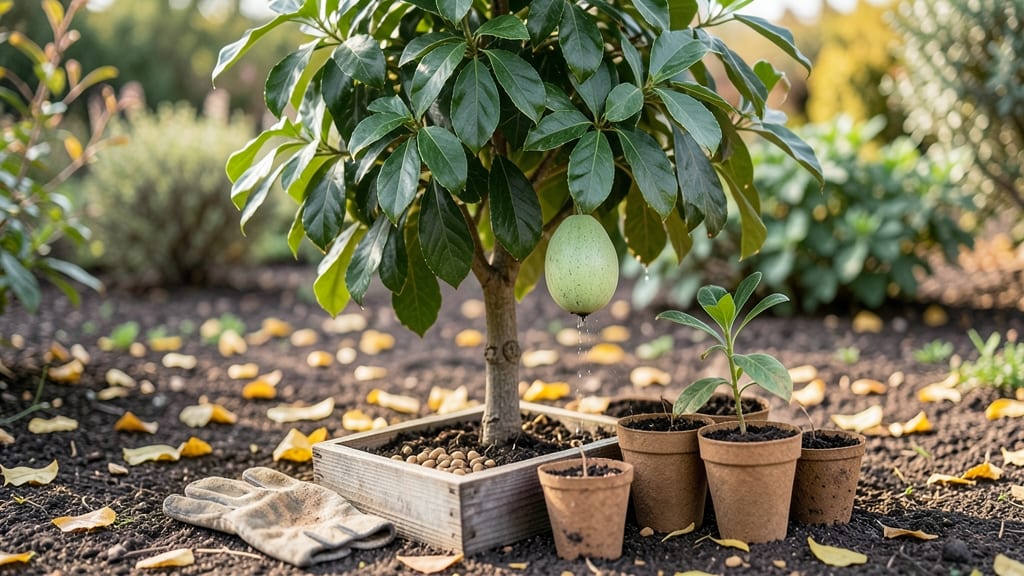
Growing feijoa from seed unlocks a tropical treasure in your garden—if you master the cold-moist method that boosts germination to 90%. 🌱 I’ve struggled with feijoa seeds before, but this technique transforms stubborn seeds into sturdy seedlings.
The secret lies in mimicking the natural conditions these subtropical fruits need to break dormancy and sprout reliably.
You’ll need just three key ingredients: fresh feijoa seeds, a damp paper towel or peat moss, and a sealed container to create humidity. Plant the seeds ¼-inch deep in well-draining soil after stratification, then maintain consistent moisture without drowning them.
Patience is critical—germination can take 4-12 weeks, but the wait pays off with hardy young plants ready for transplanting once they reach 3-4 inches tall.
The payoff arrives when your seedlings develop glossy, oval leaves and start growing at a steady pace. By summer, you’ll have small trees that thrive in partial shade, producing fragrant white flowers and—with luck—sweet, guava-like fruit in 3-5 years.
This method works best in USDA Zones 8-11, but with proper winter protection, you can grow feijoas even in cooler climates.
Common pitfalls include overwatering (which causes rot) or impatience with slow germination. The cold-moist trick ensures seeds stay viable while breaking dormancy naturally. Once your seedlings establish, they’re surprisingly low-maintenance—just prune to shape and fertilize lightly in spring. Here’s how to make it work every time.
📚 In This Guide
- What you need
- Instructions
- Tips and common mistakes
- Wrapping up and next steps
What you need
- ● Feijoa seeds: 10–20 fresh, plump seeds (harvested from ripe fruit, cleaned and dried for 1–2 days).
- ● Planting containers: 2–3 small pots (3–4 inches wide) with drainage holes, or
- ● A seed tray with individual cells (1–2 inches deep).
- ● Growing medium: 1 part peat-free potting mix + 1 part perlite or coarse sand (sterilized).
- ● Spray bottle: For gentle watering (avoid over-saturation!).
- ● Plastic wrap or humidity dome: To maintain moisture during germination.
- ● Refrigerator or cold frame: A cool, dark space (34–40°F / 1–4°C) for stratification.
- ○ Labeling tags: To track seed varieties (optional but helpful!).
- ● Seedling heat mat: (50–70°F / 10–21°C) for post-stratification warmth.
- ● Grow lights: LED or fluorescent (12–14 hours/day) if natural light is limited.
- ● Fungicide (e.g., hydrogen peroxide 3%): 1 tsp per cup of water to prevent mold.
- ● Transplanting pots: 4–6 inch pots with well-draining soil for seedlings.
- ● Garden journal: To log germination dates and progress!
Step-by-Step instructions for growing feijoa from seeds using the cold-moist method
Here’s how to break the feijoa seed’s dormancy and achieve those 90% germination rates—without the guesswork.
🌱 Step 1: Extract and Prepare the Seeds
Feijoa seeds are encased in a thick, fibrous pulp that slows germination. Scoop the seeds out of ripe fruit and rinse off any remaining fruit—don’t worry about cleaning them perfectly, just remove the obvious flesh. I like to let them air-dry for 24 hours on a paper towel; this prevents mold when we add moisture later.
Once dry, place the seeds in a small container. The key here is stratification, which mimics winter’s cold-wet conditions. You’ll need a plastic bag and a moist paper towel—fold the towel into a square, dampen it until it’s wet but not dripping, and wrap the seeds inside. Seal the bag loosely (you want airflow, not a sealed vacuum).
💧 Step 2: Cold-Moist Stratification for 6-8 Weeks
Store the bagged seeds in your refrigerator’s crispier drawer (around 35-40°F). This cold-moist treatment tricks the seed into thinking winter has passed. Check the towel every 2 weeks—if it dries out, mist it lightly with water. You’ll know it’s working when tiny roots (radicles) appear after 4-6 weeks.
Don’t rush this step. I’ve seen seeds sprout too early if kept too warm, but feijoas need that consistent chill. If you’re impatient, just wait—skipping this will leave you with 0% germination.
☀️ Step 3: Plant Stratified Seeds in Growing Medium
Once the seeds show roots or the 6-8 week period is complete, it’s time to plant. Fill small pots (around 3-4 inches deep) with a mix of 50% potting soil and 50% perlite—this ensures drainage. Plant each seed ½ inch deep and water gently until the soil is moist but not soggy.
Place the pots in a warm, bright spot (around 70-75°F). A seedling heat mat helps if your home runs cooler. Germination should happen within 2-4 weeks, but some stubborn seeds take up to 6 weeks. Keep the soil consistently moist—never let it dry out completely.
🌿 Step 4: Transplant and Care for Young Seedlings
When seedlings reach 3-4 inches tall and have 2-3 sets of true leaves, they’re ready for individual pots. Use 5-inch containers with well-draining soil. Feijoas love sunlight, so move them to a south-facing window or under grow lights for 12-14 hours daily.
Water when the top inch of soil feels dry, but avoid overwatering—feijoas hate soggy roots. Fertilize lightly with a balanced 10-10-10 mix every 4-6 weeks once they’re established. Patience is key here; feijoas grow slowly but will reward you with glossy, tropical foliage.
Tips & tricks for feijoa seed germination success
Here's what nobody tells you about getting those feijoa seeds to sprout reliably—these tricks will help you hit that 90% success rate.
Drying is Non-Negotiable: That 24-hour air-drying step in Step 1 isn't optional—it prevents mold during stratification. I've seen seeds develop fuzzy mold when rushed, which kills germination before it starts. Place them on a clean paper towel in a single layer, and resist the urge to speed this up. The seeds need this time to toughen up for the cold treatment.
The Cold-Moist Balance: In Step 2, maintaining that 35-40°F temperature is crucial, but the moisture level matters just as much. The paper towel should feel like a wrung-out sponge—not dripping, but not bone-dry either. I test this by squeezing gently—if water beads up on my fingers, it's too wet. Too much moisture causes rot; too little prevents dormancy breaking. Check your fridge's humidity levels if you're unsure.
Root Appearance Timing: When those tiny radicles (roots) appear after 4-6 weeks, don't be fooled by premature sprouting. Some seeds might try to germinate early if kept too warm. If you see sprouts before week 4, move the bag back to the fridge immediately. This patience ensures synchronized germination rather than scattered failures. The goal is uniform growth, not speed.
Planting Depth Precision: That ½-inch planting depth in Step 3 is critical—any deeper and seeds suffocate; any shallower and they dry out. I use a toothpick to mark the depth in my pots before planting. Also, gently press the soil around the seed rather than patting it down, which can compact the soil and reduce oxygen flow to the seed.
Pro Tips for Feijoa Seed Grow A Garden
- Here's what nobody tells you about getting those feijoa seeds to sprout reliably—these tricks will help you hit that ...
- Drying is Non-Negotiable: That 24-hour air-drying step in Step 1 isn't optional—it prevents mold during stratificatio...
- The Cold-Moist Balance: In Step 2, maintaining that 35-40°F temperature is crucial, but the moisture level matters ju...
Frequently asked questions
Got questions about growing feijoa from seeds? You’re not alone—this method takes patience and precision! Here are answers to the most common queries to help you troubleshoot and succeed.
How long does it take for feijoa seeds to germinate?
With the cold-moist method, expect germination in 4–12 weeks. Some seeds sprout faster, while others may take longer—especially if they’re older or stored improperly. Keep the soil consistently moist and warm (around 70°F) to speed things up. Patience is key!
Why aren’t my feijoa seeds sprouting?
If seeds aren’t germinating, check these fixes:
- Stratification issues: Ensure seeds spent at least 6 weeks in the fridge (not just cold).
- Moisture problems: Overwatering can drown seeds; underwatering halts growth. Aim for damp, not soggy.
- Temperature: Seeds need warmth (65–75°F) after cold treatment. Use a heat mat if needed.
- Seed viability: Feijoa seeds lose potency over time. Try fresh seeds or test a few in a separate pot.
Can I grow feijoa seeds indoors?
Start seeds indoors 6–8 weeks before your last frost for a head start. Use a sunny windowsill or grow lights (12+ hours/day). Once seedlings are 3–4 inches tall and frost-free, transplant them outdoors. Harden them off gradually to avoid shock.
What’s the best soil mix for feijoa seedlings?
Feijoa thrives in well-draining, slightly acidic soil (pH 5.5–6.5). Mix:
- 50% peat moss or coco coir (for moisture retention),
- 30% perlite or sand (for drainage),
- 20% compost (for nutrients).
How do I care for feijoa seedlings after germination?
Once sprouted, keep seedlings in bright, indirect light and water gently at the soil’s surface (avoid wetting leaves to prevent fungal issues). After 2–3 true leaves appear, transplant to individual pots (3–4 inches deep). Fertilize lightly with a balanced 10-10-10 mix every 4–6 weeks. Feijoas love humidity—mist leaves occasionally if your home is dry.
Are feijoa trees cold-hardy?
Mature feijoas tolerate brief dips to 20°F, but young seedlings are far more sensitive. If you live in a cold climate (Zone 8 or below), grow them in containers and overwinter indoors or in a greenhouse. Mulch heavily in winter to protect roots. Feijoas also appreciate afternoon shade in hot summers!
Wrapping up and next steps
Growing feijoa from seed using the cold-moist method is a rewarding journey that unlocks a 90% chance of success—and who doesn’t love a thriving, homegrown garden? 🌱 Whether you’re a seasoned gardener or just starting, these steps make it simple to nurture your feijoa tree from scratch.
Now that you’ve mastered the technique, why not expand your green thumb?
Your next step? Plant a few more seeds—experiment with different varieties or share the joy by gifting saplings to fellow plant lovers! 🌟 And remember, every seed you sow today could become a lush, fruiting tree tomorrow. Happy growing!