
Lawn
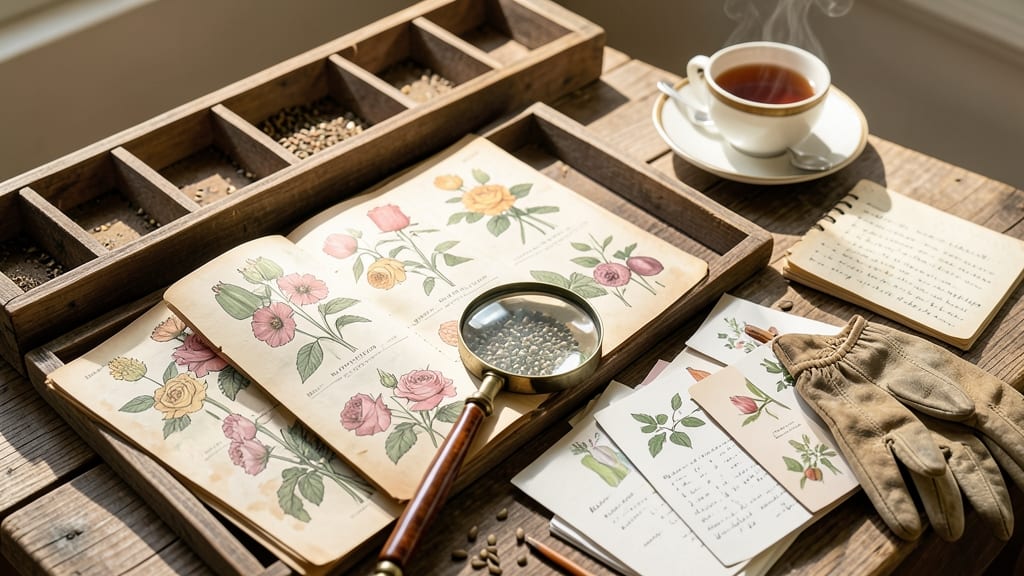
My garden seed catalogs became my year-round gardening bible after I stopped guessing when to plant. 🌱 The right seeds for your climate aren't just about timing—they're about matching varieties to your first frost dates, soil type, and even your family's favorite meals.
A single catalog can transform your garden from hit-or-miss to reliably productive.
Start by noting your USDA hardiness zone and last frost date, then look for catalogs that highlight days to maturity and planting windows—these numbers tell you exactly when to start seeds indoors or sow directly.
I cross-reference three catalogs to compare varieties: one for heat-lovers, one for cool-season crops, and one specializing in heirlooms. The best ones include planting calendars tailored to your region.
You'll end up with a planting schedule that feels like a roadmap—spring greens in March, tomatoes in May, fall brassicas in August—all timed to avoid bolting or frost damage.
The catalog descriptions also reveal spacing needs (critical for avoiding crowded plants) and whether a variety thrives in containers or needs full sun. My first catalog year saved me from buying $20 tomato plants that would've flopped in my partial shade.
Budget tip: order only what fits your square footage and seasonal goals—most catalogs include planting diagrams. Store seeds in airtight containers in the freezer to keep them viable for years.
This system turns seed shopping from a vague wishlist into a precise, rewarding plan that actually grows what you want, when you want it.
📚 In This Guide
- What you need
- Instructions
- Tips and common mistakes
- Wrapping up and next steps
What you need
- ● Garden Seed Catalogs: 2–5 (choose based on climate zones and plant varieties—look for catalogs specializing in your region, like Burpee, Park Seed, or Johnny’s Selected Seeds).
- ● Notebook or Planner: 1 (for tracking planting dates, varieties, and notes).
- ● Highlighters or Sticky Notes: 2–3 (to mark favorite seeds, deadlines, or notes).
- ● Ruler or Measuring Tape: 1 (for spacing plants accurately in your garden layout).
- ● Pencil and Eraser: 1 each (for sketching garden plans).
- ● Internet/Device: 1 (for digital catalogs, climate zone lookups, or research).
- ● Calendar or Planting Guide: 1 (to align seed orders with your frost dates and growing season).
- ● Garden Planner Software: (e.g., Gardenate or Planter apps for digital layouts).
- ● Seed Storage Containers: 1–2 (for organizing seeds by type or season).
- ● Magnifying Glass: 1 (for reading tiny print in catalogs!).
- ● Clipboard with Paper: 1 (for catalog browsing on-site at garden centers).
- ● USB Drive or Cloud Backup: 1 (to save digital catalogs or notes).
- ● Know your USDA Hardiness Zone (find it here).
- ● Determine your last frost date (use local weather resources or catalog guidelines).
- ● Sketch a rough garden layout (even a simple doodle helps!).
- ○ Check soil quality (pH test kit optional but recommended for veggies).
How to create your year-round planting calendar using seed catalogs
Seed catalogs are your secret weapon for planning a garden that thrives all year—here's how to turn pages into a personalized planting timeline.
📅 Step 1: Identify Your Hardiness Zone and Last Frost Dates
Start by locating your USDA hardiness zone (zone 5 through 10 are common for most gardeners). This determines which plants will survive winter and when you can safely plant outdoors. I always check the average last frost date for my zone—this is your first critical deadline. For example, zone 6 typically has a last frost around April 15, while zone 9 might see frost as late as December 15.
Seed catalogs often include zone recommendations next to each variety. Circle or highlight the plants that match your zone to narrow your focus. If you're unsure of your zone, use the USDA Plant Hardiness Zone Map online—it's color-coded and easy to navigate. Once you know your zone, you'll see which plants thrive in your climate and which are better suited for containers or greenhouses.
☀️ Step 2: Organize Catalogs by Planting Season
Gather all your seed catalogs and sort them into four seasonal planting groups: cool-season crops, warm-season crops, spring transplants, and fall/winter options. Cool-season plants like lettuce, spinach, and peas thrive in 50-65°F soil and can often be planted 4-6 weeks before the last frost. Warm-season crops like tomatoes, peppers, and cucumbers need soil temperatures above 60°F and are planted 2-4 weeks after the last frost.
I like to create a simple table with columns for plant name, days to maturity, planting time, and harvest time. This helps visualize how crops overlap. For example, if you plant lettuce in early spring, you can follow it with tomatoes in late spring, then another round of lettuce in late summer for a fall harvest. Most catalogs provide days to maturity, which tells you how long each plant takes to produce—critical for planning succession plantings.
📝 Step 3: Map Out Your Planting Schedule Month by Month
Using a large calendar or digital planner, mark the last and first frost dates for your zone. Then, fill in the months leading up to and following these dates with your selected crops. Start with spring plantings—cool-season crops go in first, followed by warm-season crops once soil warms. Leave space for fall plantings of cool-season crops like kale, carrots, and radishes, which can often be sown 8-10 weeks before the first frost to mature before winter sets in.
Don’t forget to include succession plantings—small batches of fast-growing crops like radishes, lettuce, or bush beans every 2-3 weeks to ensure a continuous harvest. I always pencil in notes like "plant basil every 14 days for fresh leaves all summer" or "sow spinach every 3 weeks for a steady supply." This keeps your garden productive without overwhelming you with one-time plantings.
🌱 Step 4: Adjust for Your Local Microclimate
Your yard isn’t uniform—some areas get more sun, others stay cooler or wetter. Use your catalog’s sunlight requirements to place plants in the right spots. For example, tomatoes need full sun (6+ hours daily), while leafy greens like spinach tolerate partial shade (4-6 hours of sun). If you have a shady corner, lean into catalogs that feature shade-tolerant varieties like 'Outredgeous' red lettuce or 'Mizuna' greens.
Wind, soil type, and even nearby buildings can affect plant performance. If your garden is exposed to wind, catalogs often suggest wind-resistant varieties or recommend windbreaks. For heavy clay soil, look for catalogs that highlight drought-tolerant or well-draining varieties. I always jot down notes like "plant beans near the fence for wind protection" or "amend soil with compost for carrots" to tailor my plan to reality.
⏰ Step 5: Plan for Indoor Starting and Transplanting
Many seed catalogs include indoor starting dates for transplants like tomatoes, peppers, and broccoli. These dates are calculated to give seedlings enough time to grow strong before the last frost. For example, if your last frost is April 15 and tomatoes take 60 days to transplant, you’ll start seeds indoors by February 15. Most catalogs provide a seed-starting chart—use it to mark your calendar.
Don’t forget to account for transplant shock by hardening off seedlings 7-10 days before moving them outside. I always add a reminder to "start basil indoors by March 1" and "transplant eggplants after May 1" to avoid rushing the process. If you’re short on space, prioritize compact or bush varieties—many catalogs label these clearly, making it easy to choose space-saving options.
Tips & tricks for perfect year-round garden planning
Here's what nobody tells you about turning seed catalogs into a foolproof planting schedule.
Zone-Specific Plant Selection: Some catalogs list varieties that thrive in multiple zones but perform poorly in yours. Always cross-reference the catalog's zone recommendations with your specific zone—what works in zone 7 might flop in zone 4. I've learned the hard way that 'Cherokee Purple' tomatoes love zone 5 but struggle in zone 8's heat. Pay special attention to heat-tolerant varieties in southern zones and cold-hardy options for northern climates.
Soil Temperature Timing: The 4-6 hours of sunlight mentioned for warm-season crops is just the start—soil temperature is equally critical. Use a soil thermometer to verify when your soil reaches 60°F before planting warm-season crops. I've seen gardeners plant tomatoes too early when soil was still cool, resulting in poor germination. For cool-season crops, aim for soil temperatures between 50-65°F, which often aligns with the 4-6 weeks before last frost window but requires verification.
Catalog Cross-Referencing: Don't rely on just one catalog—compare multiple sources for planting dates and varieties. Some catalogs recommend planting lettuce 6 weeks before last frost, while others suggest 4 weeks. I cross-reference at least three catalogs for each crop to find the most reliable information. Look for consistent recommendations across reputable sources like Johnny's Selected Seeds and Baker Creek Heirloom Seeds.
Microclimate Mapping: Your garden's microclimates can vary by just a few feet. I've mapped my yard with stakes marking sun exposure, wind patterns, and moisture levels. This helps me place sun-loving tomatoes in the southern exposure spot while reserving the northern side for shade-tolerant greens. Catalogs often provide sunlight requirements, but your actual yard conditions might modify these recommendations.
Pro Tips for Garden Seed Catalogs
- Here's what nobody tells you about turning seed catalogs into a foolproof planting schedule.
- Zone-Specific Plant Selection: Some catalogs list varieties that thrive in multiple zones but perform poorly in yours...
- Soil Temperature Timing: The 4-6 hours of sunlight mentioned for warm-season crops is just the start—soil temperature...
Frequently asked questions
How do I know which seed catalogs are best for my climate?
Check the catalog’s planting zone map—most include USDA Hardiness Zone guides. Look for catalogs specializing in your region (e.g., Burpee for generalists, Baker Creek for heirlooms, or Johnny’s Selected Seeds for organic growers). Pro tip: Filter by "regional" or "climate-specific" collections, like High Country Gardens for arid zones or Territorial Seed Company for the Pacific Northwest.
When should I order seeds from a catalog?
Order early—popular varieties sell out fast! For cool-season crops (spinach, peas), order 6–8 weeks before last frost. Warm-season (tomatoes, peppers) seeds go out 4–6 weeks before transplanting. Timing tip: Use your catalog’s built-in planting calendar or input your ZIP code on their website for personalized deadlines.
Are seed catalogs more expensive than store-bought seeds?
Not always! Catalogs often offer bulk discounts (e.g., 1,000+ seeds for $5) and rare varieties unavailable in big-box stores. Compare per-seed costs: A $3 packet of heirloom tomatoes from a catalog might yield 20+ plants, while a $2 store packet could be just 5 seeds. Save money: Buy non-perishables (like beans or carrots) in bulk; splurge on specialty seeds (e.g., blue corn or black Krim tomatoes).
Can I still get seeds if I miss the ordering deadline?
Yes! Many catalogs offer late-season restocks or ship seeds via expedited mail (for a fee). Local nurseries or online retailers like Seed Savers Exchange often have backup stock. Last-minute hack: Check "seed swap" groups on Facebook or Craigslist—gardeners often sell leftover packets cheaply.
How do I avoid common seed catalog mistakes?
- Overordering: Start small (e.g., 5–10 varieties max) to test what thrives in your space.
- Ignoring sun requirements: Double-check light needs—shady catalogs won’t grow in full sun!
- Skipping soil prep: Some catalogs include soil amendments; others assume you’ll DIY. Pro move: Order seeds and compost top-dressing together to save on shipping.
Wrapping up and next steps
Garden seed catalogs are your gateway to a thriving, year-round garden—no matter your climate! 🌱 From selecting the right seeds to planning seasonal rotations, these catalogs simplify the process, ensuring you grow confidently and creatively.
Whether you’re a beginner or a seasoned gardener, the key is to start small, stay organized, and let nature guide your green thumb.
Ready to turn the page on your gardening dreams? Pick a catalog, sketch your first planting calendar, and get those seeds in the soil! Your future harvest (and happy plants) are waiting. 🌿