
Planting
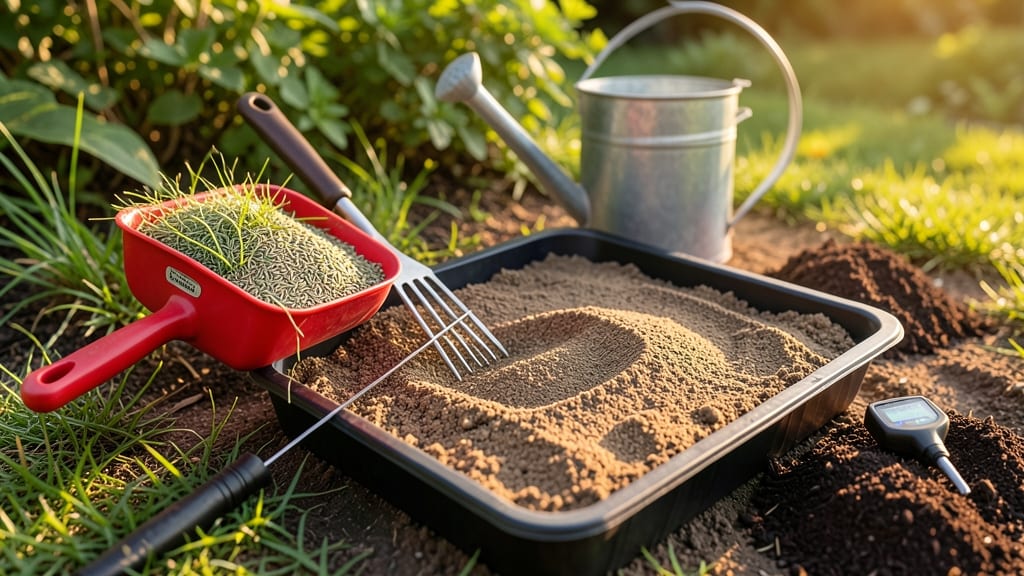
Sowing grass seed in fall is the secret weapon for a lawn so thick and green it’ll make your neighbors jealous by spring. ✨ I’ve seeded lawns in both seasons, and fall always wins—cooler temps mean fewer weeds, deeper root growth, and seedlings that establish before summer’s brutal heat hits.
The key? Timing it right after summer’s last mow but before winter’s first hard frost.
Here’s the game-changer: fall seeds germinate slowly in cool soil, giving them time to develop strong roots before dormancy. You’ll need a broadcast spreader (or a sturdy hand spreader), high-quality seed (pick a mix suited to your climate), and topsoil or compost to cover those tiny seeds.
Skip the spring rush—fall gives you a head start on next year’s lawn.
By spring, you’ll have a uniform, weed-resistant carpet of grass that outcompetes annual weeds before they even sprout. The secret’s in the prep: aerate compacted soil, rake out debris, and keep seeds moist until germination. Even in drought-prone areas, fall’s natural moisture helps seedlings thrive without daily watering.
Works for cool-season grasses (like Kentucky bluegrass and fescue) in zones 3-8, and even warm-season grasses in mild winters. Just avoid seeding when frost is forecasted—wait for stable daytime temps above 50°F. Here’s how to nail it every time.
📚 In This Guide
- What you need
- Instructions
- Tips and common mistakes
- Wrapping up and next steps
What you need
- ● High-quality grass seed: Choose a blend suited to your climate and lawn use (e.g., tall fescue or ryegrass). Aim for 10–15 lbs per 1,000 sq ft for new lawns or 5–8 lbs for overseeding.
- ● Lawn fertilizer: A balanced, slow-release formula (e.g., 16-4-8 or 20-5-10) with fall-specific timing (look for labels like "fall" or "cool-season"). Apply ½ lb of nitrogen per 1,000 sq ft at seeding.
- ● Topsoil or compost: A ¼-inch layer to improve seed-to-soil contact and nutrient availability.
- ○ Starter fertilizer (optional but recommended): High in phosphorus (e.g., 5-10-10 or 0-0-20) to boost root growth. Use ½ lb of phosphorus per 1,000 sq ft.
- ● Broadcast spreader: For even seed distribution (manual or drop-type). Calibrate for your seed’s spread rate!
- ● Rake: A bow rake (for leveling soil) and a stiff-bristle rake (to create fine furrows for seed).
- ○ Lawn mower (optional): Set blades to 2–3 inches to mow existing grass before overseeding.
- ● Garden hose or sprinkler: For gentle, frequent watering (keep soil moist but not soggy).
- ○ Soil test kit (optional): To check pH and nutrient levels—ideal range is 6.0–7.0 for most grasses.
- ○ Straw or peat moss (optional): Lightly spread ¼-inch layer to retain moisture and protect seeds from birds.
- ● Weather window: Aim for 4–6 weeks before the first hard frost (typically September–November, depending on your zone).
- ● Soil prep: Remove debris, loosen compacted soil, and repair bare spots.
- ● Existing lawn care: If overseeding, mow short and dethatch if needed.
Step-by-Step instructions for sowing grass seed in fall
Fall is the perfect time to establish a lawn that thrives through winter and explodes with growth in spring.
🌱 Step 1: Prepare the Soil for Optimal Seed Germination
Start by removing all existing vegetation using a sod cutter or by hand. I like to rent a sod cutter for large areas—it saves hours of backbreaking work. Once the old grass is gone, till the soil to a depth of 4-6 inches to break up compaction and improve aeration. This is critical because compacted soil blocks root growth and prevents seeds from making contact with moist soil.
After tilling, rake the surface smooth with a leveling rake. You want a fine, crumbly texture—like freshly tilled garden soil. Test the pH of your soil using a soil test kit; grass prefers a slightly acidic range of 6.0-7.0. If your soil tests outside this range, apply the recommended amount of lime or sulfur before proceeding. Let the soil settle for 24 hours before seeding to allow any amendments to integrate.
💧 Step 2: Spread Seed Evenly for Uniform Growth
Use a broadcast spreader to distribute the grass seed evenly across the prepared area. I always walk in two perpendicular directions—first north to south, then east to west—to ensure complete coverage. Most seed packages recommend 8-12 pounds per 1,000 square feet for cool-season grasses. Lightly rake the seeded area with a stiff-bristled rake to press seeds into the soil just enough to ensure good soil contact without burying them too deeply.
Cover the seeds with a thin layer of ¼-inch of fine compost or topsoil. This protects seeds from drying out and predatory birds while still allowing sunlight to reach them. Avoid using heavy mulch or peat moss, as these can suffocate the seeds. Once covered, give the area a gentle watering with a fine mist nozzle to settle the soil and activate the seed.
☀️ Step 3: Water Consistently to Encourage Germination
Water the seeded area lightly twice daily—once in the morning and once in the evening—for the first 10-14 days. Keep the top 1-2 inches of soil consistently moist, but never soggy. You’ll know you’re doing it right when the soil feels like a damp sponge. Overwatering can cause seeds to rot, while underwatering leads to patchy germination.
After the grass reaches 2-3 inches tall, gradually reduce watering to once daily. At this stage, water deeply to encourage deep root growth. Avoid walking on the new grass until it reaches 3-4 inches tall—this prevents soil compaction and damage to the delicate seedlings. Fall-sown grass typically germinates within 7-21 days, depending on temperature and moisture levels.
✂️ Step 4: Maintain and Protect New Growth Through Winter
Once the grass reaches 3-4 inches tall, mow it to 2-3 inches using a sharp mower blade set to the highest setting. This helps the grass establish a strong root system before winter dormancy. Avoid fertilizing in late fall, as new growth can be damaged by frost. Instead, apply a light layer of compost in early spring to provide nutrients as the grass begins to grow actively again.
If your region experiences heavy snowfall, avoid shoveling snow directly onto the lawn. Instead, use a snowblower or gently push snow to the sides to prevent smothering the grass. In early spring, once the soil begins to thaw, resume watering if rainfall is insufficient. You’ll notice the lawn fill in any bare spots and develop a lush, uniform appearance by late spring.
Tips & tricks for perfect fall grass seed sowing
Fall lawn establishment requires precision timing and smart techniques—here's how to maximize your success without the common pitfalls.
Soil Preparation Secret: After tilling to that 4-6 inch depth in Step 1, I recommend running a simple "finger test" to check moisture. Press your finger into the soil—it should hold together slightly but crumble when you touch it. If it feels like dry sand, water lightly before seeding. Proper moisture at this stage is what ensures those seeds make contact with damp soil rather than sitting on top. The 24-hour settling period after amendments is non-negotiable—this gives lime or sulfur time to integrate without disrupting your freshly tilled surface.
Seed Distribution Technique: For Step 2, here's what nobody tells you about broadcast spreaders: walk at a steady pace (about 3-4 mph) to maintain even coverage. I mark my lawn with stakes every 10 feet to ensure I don't miss spots. After spreading, I do a "coin toss test"—if a quarter-sized area has 10-15 seeds, you've got good coverage. The quarter-inch compost layer should be sifted through a fine screen to avoid clumps that could suffocate seeds. This light coverage is what creates that perfect balance between protection and sunlight access.
Germination Watering Strategy: During those critical 10-14 days in Step 3, I set a timer for my morning and evening watering sessions—exactly 10 minutes each. The key is maintaining that damp sponge consistency without creating puddles. I use a rain gauge to measure exactly 0.25 inches of water per session. This precise approach prevents both overwatering (which causes seed rot) and underwatering (which leads to patchy germination). Once you see those first green shoots, you'll know your timing was perfect.
Winter Protection Insight: In Step 4, when your grass reaches 3-4 inches, I recommend leaving the grass slightly longer than 2-3 inches during early winter—about 3 inches—before your first heavy frost. This extra height provides insulation against temperature fluctuations. For snow protection, I spread a thin layer of straw (not hay) over heavily snowed areas—just enough to prevent direct snow contact but not enough to smother the grass. This simple technique can mean the difference between a lawn that survives winter and one that struggles to recover in spring.
Pro Tips for Sowing Grass Seed In Fall
- Fall lawn establishment requires precision timing and smart techniques—here's how to maximize your success without the common pitfalls.
- Soil Preparation Secret: After tilling to that 4-6 inch depth in Step 1, I recommend running a simple "finger test" to check moisture.
- Seed Distribution Technique: For Step 2, here's what nobody tells you about broadcast spreaders: walk at a steady pace (about 3-4 mph) to maintain even coverage.
Frequently asked questions
Got questions about sowing grass seed in fall? You’re not alone! Here are answers to the most common concerns—so you can tackle your lawn project with confidence.
When is the exact best time to sow grass seed in the fall?
The ideal window is 4–6 weeks before your first hard frost—typically late August to early October in most U.S. regions. Cool nights (50–65°F) and warm days help seeds germinate without stress. Check your local frost dates or ask a local nursery for precision timing!
What if I miss the fall window? Can I still plant in winter?
Winter sowing is risky but possible in mild climates (Zones 7–10). Seeds may germinate in spring, but cold snaps can kill them. If you must plant late, use a winter seed blend and protect seedlings with straw mulch. Spring planting is the backup plan!
How often should I water after sowing grass seed?
Keep soil consistently moist (not soggy!) for the first 2–3 weeks. Water lightly 2x daily (morning and evening) to avoid washing away seeds. Once sprouts appear, taper to 1 inch per week. A sprinkler with a gentle mist setting works best.
How do I stop birds/squirrels from eating my grass seed?
Use these tricks:
- Pre-sow: Spread seed starter fertilizer (it masks scent) or mix seeds with compost.
- Post-sow: Cover seeds with straw mulch or lightweight netting.
- Distractions: Scatter corn or birdseed far from your lawn.
My grass didn’t grow thick last fall. What went wrong?
Common culprits:
- Poor soil prep: Test pH (ideal: 6.0–7.0) and till in compost.
- Thin seeding: Aim for 10–20 lbs per 1,000 sq ft (check seed bag rates).
- Weeds: Pre-treat with vinegar spray or hand-pull before sowing.
- Drought/heat: Fall planting in hot zones? Try early spring instead.
Wrapping up and next steps
Fall is the perfect time to sow grass seed for a lush, vibrant lawn by spring—thanks to cooler temperatures, fewer weeds, and ideal moisture levels!
By following these steps—preparing the soil, choosing the right seed, and maintaining consistency—you’ll set your lawn up for success. Don’t wait until spring; give your grass a head start now!
Ready to take action? Grab your supplies, mark your calendar, and start sowing this weekend. Your future green oasis is just a few seeds away! 🌱