
Lawn
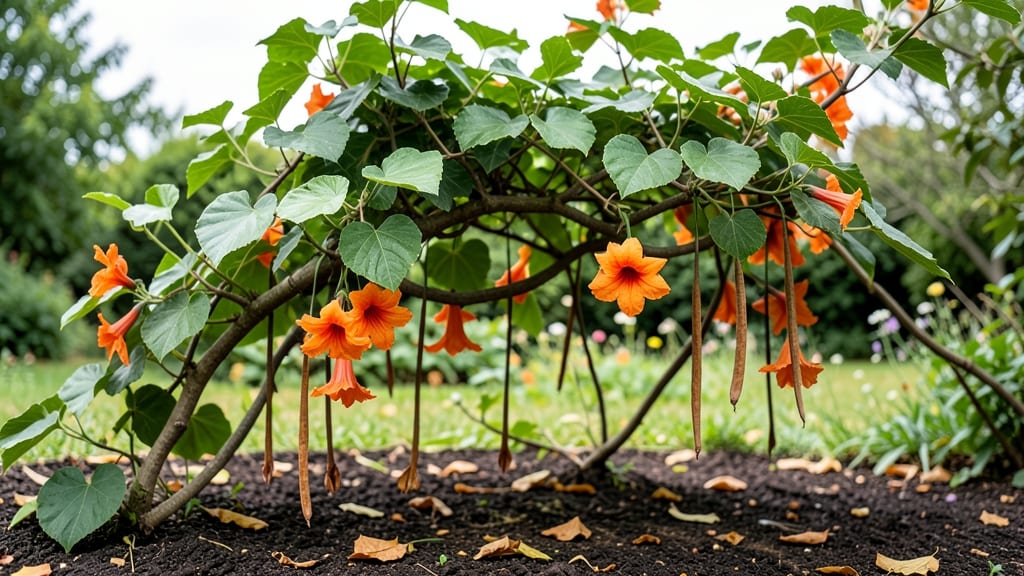
Harvesting trumpet vine seed pods doesn’t require gloves or patience—just a twist and a snap. 🌱 The key is knowing when those pods turn from green to brown and how to release the seeds without the mess, so you can propagate your own vigorous vines year after year.
Timing matters most: collect pods when they’re fully dry and brown, usually in late summer or early fall. A simple twist releases the seeds cleanly, and storing them in a paper bag keeps them viable until planting season.
This method works for both gardeners and those with limited space—no special tools needed.
Once you’ve got the seeds, germination is straightforward with the right conditions: warm soil, consistent moisture, and bright light. You’ll see sprouts within 2-3 weeks, and with proper support, your trumpet vines will climb and bloom like the showstoppers they are.
For best results, plant in well-draining soil with full sun exposure, and be patient—these vines grow fast but need time to establish. Avoid overwatering, and watch for pests like aphids, which can set back young plants if left unchecked.
📚 In This Guide
- What you need
- Instructions
- Tips and common mistakes
- Wrapping up and next steps
What you need
- ● Pruning shears or sharp bypass loppers – 2-3 pairs (for clean cuts; 10-12" blades for thick stems)
- ● Heavy-duty gloves – 1 pair (gardening gloves with reinforced palms for protection)
- ● Large plastic or fabric bags – 2-3 (10-15 gallon capacity) (for collecting pods and debris)
- ● Small hand pruners – 1 pair (for delicate pod removal)
- ● Ladder or step stool – 1 (6-8 ft height) (if vines are high; non-slip base recommended)
- ○ Twine or bungee cords – 1 roll (optional but helpful) (for securing bags or bundling vines)
- ● Spray bottle with water – 1 (8-16 oz) (to mist pods if they’re stubbornly closed)
- ● Disposable knee pads – For comfort if working on the ground.
- ● Small wheelbarrow or tray – To transport harvested pods easily.
- ● Labeling tags & marker – If saving seeds for future planting.
- ● Safety glasses – To shield eyes from debris or sap.
Instructions for harvesting trumpet vine seed pods
Here's how I collect seed pods without stressing the plant or wasting time.
🌿 Step 1: Identify Ripe Seed Pods
Trumpet vine seed pods mature when they turn from green to a deep brown color and feel slightly papery to the touch. I look for pods that have dried completely but haven't split open yet—this is your perfect harvesting window. The pods should also detach easily when gently twisted from the vine.
Check pods in the morning after any overnight dew has dried. Wet pods stick to fingers and make handling messy. If you find a pod that's already cracked open, skip it—the seeds inside are likely already dispersed or damaged.
✂️ Step 2: Harvest Using the Twist-Release Technique
Grasp the pod firmly near its base where it connects to the vine. Using a gentle twisting motion, rotate your hand clockwise or counterclockwise until you feel the pod separate. This method preserves the vine's energy and prevents unnecessary damage compared to cutting or pulling.
If a pod resists, don't force it—wait another day or two. Overly aggressive harvesting can stress the plant and reduce next year's seed production. I always harvest 2-3 pods at a time to avoid overwhelming the vine.
🪴 Step 3: Store Pods for Seed Extraction
Place freshly harvested pods in a paper bag and store them in a dry, well-ventilated area for 7-10 days. The paper allows moisture to escape while keeping pods contained. Shake the bag gently every few days to help loosen seeds inside the pods.
Once the pods feel completely dry and crumbly, empty them onto a clean surface. The seeds will naturally separate from the chaff. I use a fine-mesh sieve to sift through the debris and collect only the plump, dark seeds for planting.
⏰ Step 4: Prepare Seeds for Planting
Soak the collected seeds in lukewarm water for 12 hours to soften their tough outer coating. This step improves germination rates significantly. After soaking, drain the seeds and let them dry on a paper towel for 24 hours before storing in an airtight container.
Label your container with the variety name and date. Stored properly, trumpet vine seeds remain viable for 2-3 years. I keep mine in a cool, dark place until spring planting, when temperatures consistently stay above 60°F for reliable germination.
💧 Step 5: Plant Seeds for New Growth
Sow seeds ½ inch deep in well-draining soil after the last frost date. Trumpet vines thrive in full sun and tolerate poor soil conditions, but I always mix in compost for better establishment. Space seeds 12 inches apart—they'll grow quickly and need room to spread.
Keep the soil consistently moist but not soggy during germination, which typically occurs in 14-21 days. Once seedlings appear, reduce watering slightly to prevent damping-off. I find that a light mulch layer helps retain moisture while protecting young plants from temperature swings.
Tips & tricks for perfect trumpet vine seed collection
Here's what nobody tells you about harvesting trumpet vine seed pods without wasting a single one.
Timing Secret: Harvest pods in the morning when they're completely dry from overnight dew. Wet pods stick to your fingers and can tear, ruining the delicate seed pods. I've learned the hard way—waiting until dew dries completely saves hours of frustration later. The pods should feel dry and papery, not sticky or damp.
Harvesting Technique: When using the twist-release method in Step 2, apply gentle pressure—think of unscrewing a jar lid. Over-twisting can damage the vine's growth points. I always twist clockwise first, then counterclockwise if needed, until the pod separates cleanly. This preserves the vine's energy for next year's production.
Storage Wisdom: After storing pods for the required 7-10 days, give them one final shake over a clean white towel before opening. This helps separate seeds from chaff more effectively. The contrast of dark seeds against the white towel makes it easier to spot and collect only the plump, viable ones for planting.
Planting Preparation: For the 12-hour soak in Step 4, use lukewarm water—never hot. Hot water can damage the seed's delicate structure, while cold water won't soften the coating effectively. I always use a glass jar for soaking so I can easily monitor the seeds and ensure they're fully submerged without overcrowding.
Pro Tips for Trumpet Vine Seed Pods
- Here's what nobody tells you about harvesting trumpet vine seed pods without wasting a single one.
- Timing Secret: Harvest pods in the morning when they're completely dry from overnight dew. Wet pods stick to your fin...
- Harvesting Technique: When using the twist-release method in Step 2, apply gentle pressure—think of unscrewing a jar ...
Frequently asked questions
Got questions about harvesting trumpet vine seed pods? You’re not alone! Here are some of the most common inquiries—plus quick, stress-free answers to keep your garden thriving.
When is the best time to harvest trumpet vine seed pods?
Harvest seed pods when they turn tan or brown and start splitting open naturally—usually in late fall or early winter. Avoid harvesting too early (green pods won’t release viable seeds), but don’t wait too long or the seeds may scatter. A gentle twist releases them effortlessly!
What if my seed pods won’t twist open?
If pods resist, they may still be too moist or immature. Try these fixes:
- Dry them out: Place pods in a paper bag with a few holes for 1–2 weeks in a warm, dry spot.
- Gently crack them: Use a butter knife to carefully slice along the seam (wear gloves—some vines have sticky sap!).
- Soak in warm water: Submerge pods for 12 hours to soften fibers, then twist.
Pro tip: Never force-open pods—this can damage the seeds inside.
Can I grow trumpet vine from store-bought seeds?
Yes! Store-bought seeds work, but freshly harvested pods often have higher germination rates. If buying seeds, check for “Campsis radicans” (the scientific name for trumpet vine) and store them in a cool, dry place until planting. For best results, stratify seeds (mix with damp sand, refrigerate for 2–3 months) before sowing in spring.
Are trumpet vine seed pods toxic to pets or wildlife?
While trumpet vine itself isn’t highly toxic, the seeds and pods contain mild toxins that can cause stomach upset if ingested in large quantities. Keep pets away from chewed pods or scattered seeds. Birds and squirrels may eat them without issue, but monitor curious pets. If concerned, opt for non-invasive alternatives like Campsis grandiflora (Chinese trumpet vine), which is less aggressive.
How do I store harvested trumpet vine seeds for next year?
Store seeds in a paper envelope or breathable container with a moisture absorber (like silica gel) in a cool, dark place (ideally 35–40°F). Label with the harvest date—seeds stay viable for 1–2 years if kept dry. For longer storage, freeze seeds in a sealed bag for up to 5 years.
Wrapping up and next steps
Harvesting trumpet vine seed pods doesn’t have to be a struggle—with the right technique, you can enjoy stress-free collection that protects both your plants and your sanity! 🌿 Whether you’re saving seeds for next season or simply tidying up your garden, the twist-release method ensures efficiency and minimal mess.
Now that you’re armed with the know-how, grab those gloves and get ready to transform potential frustration into a satisfying gardening task.
Ready to take the next step? Mark your calendar for late summer or early fall—the prime time to harvest—and watch your trumpet vine thrive with a little less clutter and a lot more ease. Happy harvesting! 🌟