
Propagation
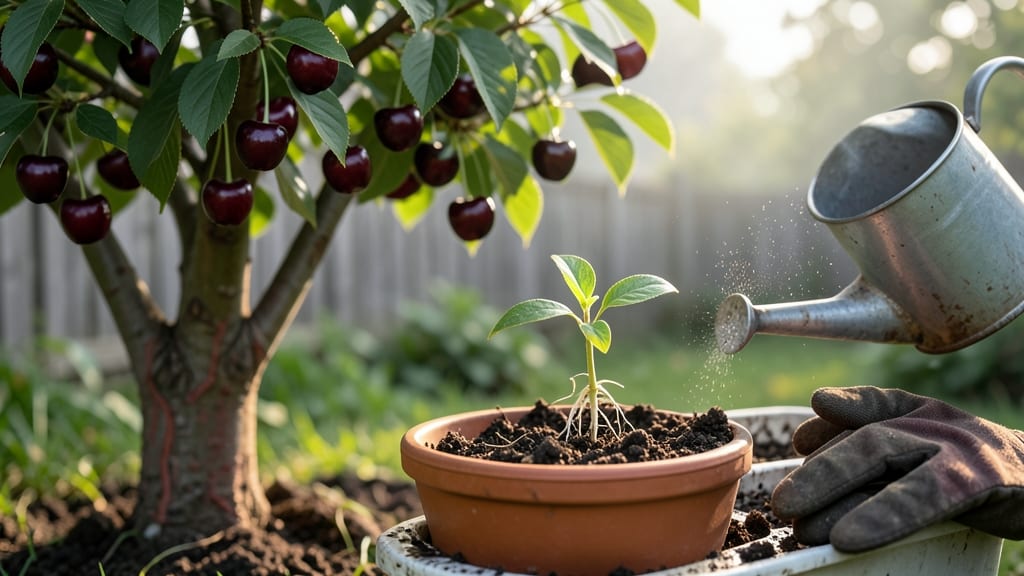
Growing a cherry tree from seed to fruit is the ultimate patience test—and the most rewarding garden adventure you’ll ever take. 🌱 I’ve watched my own seedling grow from a speck of brown to a tree heavy with tart cherries, and the process teaches more about gardening than any book ever could.
The key isn’t rushing it; it’s understanding each stage’s quirks, from the finicky germination to the years-long wait for fruit.
First, you’ll need a fresh pit from a sweet or tart cherry (not the hybrid supermarket kind—they won’t grow true). Stratify it in damp sand for 60-90 days in the fridge to break dormancy, then plant it shallowly in well-draining soil.
Germination can take 3-6 months, but don’t give up—persistence pays off. Once sprouted, the real work begins: pruning to shape strong branches, ensuring cross-pollination (you’ll need at least two trees), and protecting young bark from hungry critters.
By year 5 or 6, you’ll start seeing tiny blossoms, and if all goes right, those will turn into real, edible cherries—though they might be smaller and less uniform than store-bought. The payoff?
Fruit that tastes like summer in your own backyard, and the pride of knowing you grew it from a single seed. It’s not fast, but it’s worth every season of waiting.
Here’s the catch: most seed-grown cherries won’t be true to the parent tree’s flavor or size. If you want reliable fruit, graft a named variety onto your seedling later—but even then, the journey from seed to harvest is unforgettable. Ready to start your own cherry legacy?
📚 In This Guide
- What you need
- Instructions
- Tips and common mistakes
- Wrapping up and next steps
What you need
- ● Cherry seeds: 5–10 fresh, high-quality seeds (from a sweet cherry like Bing or Rainier for best results). Pro tip: 💡 Store seeds in a dry, cool place until ready to plant!
- ● Seed-starting mix: 1–2 bags (10–15 cubic feet) of sterile, well-draining potting soil (avoid garden soil—it may contain pathogens).
- ● Containers: Small pots (4–6 inches deep) for germination (1–2 per seed).
- ● Larger pots (1–2 gallons) for seedlings (after sprouting).
- ○ Optional: Seed trays with domes for humidity control.
- ● Grow lights or sunny windowsill: A full-spectrum LED grow light (12–16 hours/day) or a south-facing window with 6+ hours of sunlight.
- ● Watering can or spray bottle: With a fine mist setting for gentle hydration.
- ● Fertilizer: Balanced liquid fertilizer (e.g., 10-10-10) for seedlings.
- ● Slow-release granular fertilizer (e.g., 10-10-10 or 5-10-10) for transplanting.
- ● Pruning shears: Sharp, sterilized shears for trimming seedlings and shaping trees.
- ● Support stakes or trellis: 4–6-foot bamboo stakes or a small trellis for young trees.
- ● Mulch: Organic mulch (e.g., straw or wood chips) to retain moisture and suppress weeds.
- ● Patience: Cherries from seed can take 3–5 years to bear fruit—plan accordingly!
- ● Climate zone: Cherry trees thrive in USDA zones 5–9. Pro tip: 🌡️ If you’re in a colder zone, start seeds indoors 8–10 weeks before the last frost.
- ● Pollination: Most cherry trees are self-pollinating, but planting two varieties nearby can boost fruit production.
- ● Space: Mature cherry trees need 15–20 feet of space. Dwarf varieties (if available) may require less.
- ● Pest control: Monitor for aphids, borers, and birds—have netting or organic sprays ready.
- ● Heating mat (for faster germination in cooler climates).
- ● pH testing kit (ideal soil pH: 6.0–6.5).
- ● Rooting hormone (to encourage stronger seedling roots).
- ● Drip irrigation system (for consistent moisture in drier climates).
- ● Journal or app (to track growth stages, watering, and fertilizing).
Step-by-step instructions for growing cherries from seed to fruit
Here's the long-term plan—cherry trees take patience, but the journey is rewarding.
🌱 Step 1: Stratify and Plant the Seeds
Start by cleaning the pits thoroughly and removing any remaining fruit flesh. Place them in a plastic bag with a damp paper towel, then refrigerate for 6-8 weeks to complete stratification. This mimics winter cold and breaks seed dormancy—critical for germination.
After stratification, plant the pits 1 inch deep in a pot filled with well-draining potting mix. Use a small container (about 6 inches wide) since seedlings grow slowly at first. Keep the soil consistently moist but not soggy—you'll know it's right when the top inch feels damp to the touch.
☀️ Step 2: Provide Light and Care for Seedlings
Move the pot to a sunny window or under grow lights immediately after germination. Cherry seedlings need 6+ hours of direct light daily to avoid leggy growth. If leaves appear pale or stems stretch toward the light, your setup isn't bright enough—supplement with a grow light within 4 inches of the seedlings.
Water when the top inch of soil feels dry, but avoid overwatering. Seedlings are prone to damping-off, a fungal disease that causes stems to rot at the base. If you notice blackened stems, reduce watering and improve airflow by spacing pots apart.
🌿 Step 3: Transplant and Prune for Strong Growth
After 2-3 years, when the seedling reaches 3-4 feet tall, transplant it outdoors in a permanent location. Choose a spot with full sun and well-draining soil—cherry trees hate soggy roots. Dig a hole twice as wide as the root ball but no deeper.
Prune in late winter or early spring to remove dead or crossing branches. Focus on opening the center of the tree to improve airflow and sunlight penetration. You'll see new growth emerge from the pruned areas within 4-6 weeks—this signals the tree is recovering well.
⏰ Step 4: Maintain Through Flowering and Fruit Set
Cherry trees typically take 5-7 years to bear fruit, but consistent care speeds up the process. Fertilize in early spring with a balanced 10-10-10 formula, then again after flowering. Water deeply once a week during dry spells, aiming for 1 inch of water per week—more in extreme heat.
Watch for pests like aphids or borers. Aphids cluster on new growth and can stunt flowering, while borers tunnel into the trunk. If you spot them, treat with neem oil or insecticidal soap. Healthy trees produce small, tart cherries by year 5—though full-sized fruit may take another 2-3 years.
🍒 Step 5: Harvest and Plan for Next Year
Cherries ripen in late summer to early fall, depending on your climate. Pick them when they're fully colored and slightly soft to the touch. Harvest in the morning on a dry day to preserve quality. Store in the fridge for up to 2 weeks or freeze for long-term use.
After harvesting, clean up fallen fruit and leaves to prevent disease. In late fall, apply a layer of mulch around the base to protect roots from freezing temperatures. This sets the stage for another productive season—cherry trees reward patience with decades of fruit.
Tips & tricks for growing cherries from seed to fruit
Growing cherries from seed is a marathon, not a sprint—here's how to maximize your chances of success at every stage.
Stratification Success: Don't skip the 6-8 weeks in the fridge—this cold treatment mimics winter and breaks the seed's natural dormancy. I've seen seeds sprout within weeks after stratification, but some stubborn ones may take longer. If you're impatient, check occasionally after 4 weeks—you might get lucky! If nothing happens by week 8, don't give up; some varieties need extra time.
Lighting Strategy: Those critical 6+ hours of daily light are non-negotiable for healthy seedlings. I've learned the hard way that weak light leads to leggy, weak plants that struggle later. If your windows aren't sunny enough, invest in a basic grow light—even a simple LED bulb within 4 inches will make a world of difference. Rotate your pots weekly so all sides get even exposure.
Transplanting Timing: Waiting until the seedling reaches 3-4 feet tall (after 2-3 years) gives it strong enough roots to handle the move. I recommend doing this in early spring when the tree is just starting to wake up from dormancy. Water thoroughly before transplanting, then give it a deep watering immediately after to reduce shock. The wider hole you dig helps prevent root circling, which can strangle your tree as it grows.
Pest Prevention: Aphids and borers are the biggest threats to your young tree. I've found that a weekly inspection during growing season catches problems early. For aphids, a strong spray of water often dislodges them—try it before reaching for chemicals. For borers, the key is prevention: keep your tree healthy with proper watering and fertilization, and treat any nearby trees to prevent infestations from spreading.
Pro Tips for Cherry From Seed To Fruit
- Growing cherries from seed is a marathon, not a sprint—here's how to maximize your chances of success at every stage.
- Stratification Success: Don't skip the 6-8 weeks in the fridge—this cold treatment mimics winter and breaks the seed'...
- Lighting Strategy: Those critical 6+ hours of daily light are non-negotiable for healthy seedlings. I've learned the ...
Frequently asked questions
Got questions about growing cherries from seed? You’re not alone—this process can feel tricky! Below, we’ve rounded up the most common queries from home gardeners, along with straightforward answers to help you navigate from seed to fruit with confidence.
How long does it take for a cherry seed to sprout?
A cherry seed typically takes 4–8 weeks to germinate indoors, depending on temperature (60–75°F is ideal) and moisture levels. Patience is key—some seeds may take longer, especially if they’ve been dried or stored. Pro tip: Use a heating mat to speed up germination if your home runs cool!
Can I grow a cherry tree from any store-bought cherry?
Not all cherries are created equal! Sweet cherries (like Bing or Rainier) often won’t grow true from seed—you’ll likely get a wild, sour tree. Tart cherries (such as Montmorency) have a better chance, but for reliable results, source seeds from heirloom or seed-grown varieties. Alternative: Grafting onto a rootstock ensures consistent fruit.
How many years until my cherry tree produces fruit?
Be prepared for a long wait: Seed-grown cherry trees usually take 5–10 years to bear fruit, while grafted trees may fruit in 3–5 years. Factors like climate, soil quality, and care (like pruning and pollination) can speed this up. Fun fact: Dwarf varieties can fruit faster but may have smaller yields.
Do cherry trees need cross-pollination to produce fruit?
Yes! Most cherry trees are self-unfruitful, meaning they need another cherry tree (preferably a different variety) within 50–100 feet for pollination. Plant two compatible trees (e.g., ‘Stella’ and ‘Lapins’) to ensure fruit set. Bonus: Bees and other pollinators love cherries—plant flowers nearby to attract them!
Why isn’t my cherry seedling growing? Troubleshooting tips
If your seedling stalls, check these common issues:
Leggy or weak? It might need more light (12+ hours/day) or less water (overwatering causes rot).
Yellow leaves? Could be nutrient deficiency (use a balanced fertilizer) or overwatering.
No new growth? It may be dormant—cherry seeds often rest before sprouting. Try stratification (cold treatment) if you skipped it.
Pro tip: Transplant outdoors only after the last frost and when the seedling is at least 6–12 inches tall with sturdy stems.Wrapping up and next steps
Growing cherries from seed to fruit is a rewarding journey that blends patience with the joy of nurturing life. From the first sprout to your first homegrown harvest, each step—whether it’s stratifying seeds, pruning young saplings, or protecting blossoms—teaches you the art of sustainable gardening. 🌱✨
Now that you’re armed with the timeline and tips, why not take the next step? Start with a single seed today—your future cherry tree (and delicious snacks!) will thank you. Happy growing!