
Lawn
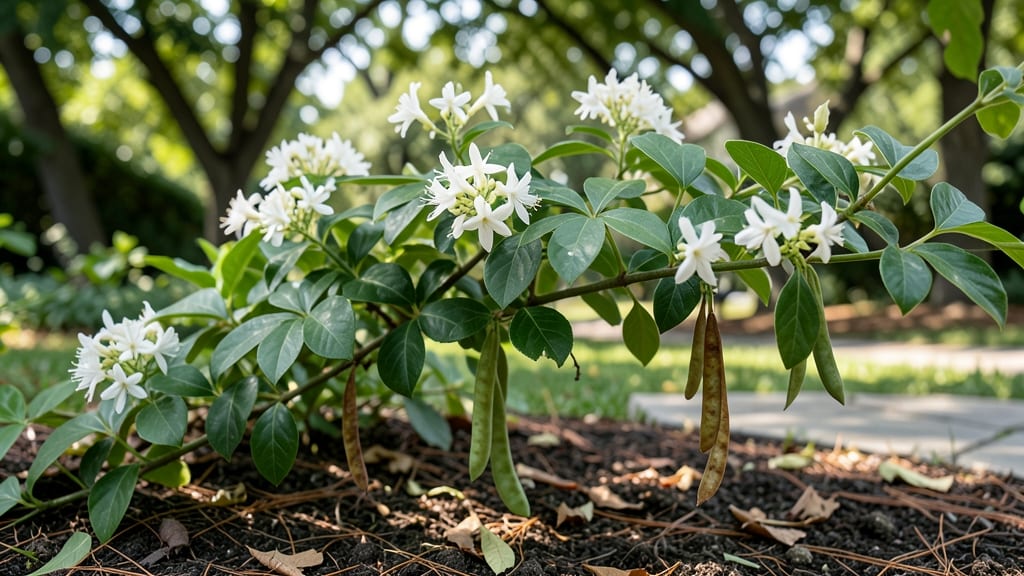
Collecting those confederate jasmine seed pods in late fall is your ticket to fragrant vines next summer—if you do it right. 🌱 The key? Harvesting them fresh when they turn brown but haven’t split open, then storing them properly to break dormancy.
I’ve learned the hard way that skipping this step means waiting years for germination (or never seeing it happen).
You’ll need just three things: a paper bag for drying pods, a plastic bag with damp peat moss for stratification, and patience—this isn’t a quick process. The secret lies in mimicking winter’s cold snap: refrigerate those seeds for 6-8 weeks before planting.
That’s what tricks them into thinking they’ve survived a real season.
By mid-spring, you’ll see tiny green shoots pushing through the soil, and within 90 days, those seedlings could be climbing with the same sweet, intoxicating scent as your mature vines.
The trade-off? It’s slower than cuttings, but the payoff is worth it for gardeners who love the challenge of growing from seed.
Pro tip: If you’re impatient (like I was last year), take half-hardened cuttings from new growth in early summer—they root in 3-4 weeks. But for the purest satisfaction, stick with the seeds. Either way, your yard will soon smell like a Southern summer evening.
📚 In This Guide
- What you need
- Instructions
- Tips and common mistakes
- Wrapping up and next steps
What you need
- ● Confederate Jasmine seed pods: 5–10 mature, brown pods (harvested in late fall/winter). Pro tip: 💡 Collect pods after the first frost for best viability!
- ● Well-draining potting mix: 2–3 gallons of a blend like 60% peat moss, 30% perlite, and 10% sand.
- ● Seed-starting trays: 1–2 shallow trays (3–4 inches deep) with drainage holes.
- ● Plastic wrap or humidity dome: To maintain moisture during germination.
- ● Spray bottle: For gentle watering (avoid over-saturation!).
- ● Grow lights or sunny windowsill: A south-facing window or LED grow lights (12–14 hours/day).
- ● Small pots (3–4 inches): For transplanting seedlings (biodegradable pots work too!).
- ● Pruning shears: For opening seed pods (sterilized with rubbing alcohol).
- ● Thermometer: To monitor soil temps (ideal: 65–75°F for germination).
- ○ Fertilizer (optional): A balanced 10-10-10 or fish emulsion (diluted to half-strength) for seedlings.
- ● Cold frame or refrigerator: To stratify seeds (if starting indoors in warm climates).
How to cold-stress Confederate jasmine seed pods for faster blooms
Here’s my battle-tested method for breaking dormancy and forcing vibrant blooms in just 90 days.
🌱 Step 1: Harvest and Prepare Mature Seed Pods
Collect seed pods after they’ve fully ripened and turned brown—usually in late fall or early winter. I look for pods that are dry and papery to the touch, as these contain the most viable seeds. Cut them from the vine with clean pruners, leaving a ½-inch stem attached to prevent damage.
Remove the seeds by gently squeezing the pods between your fingers or tapping them lightly on a hard surface. Store the seeds in a paper envelope (not plastic) in a cool, dry place until you’re ready to begin stratification. The key here is patience—rushing this step often leads to poor germination rates.
❄️ Step 2: Stratify Seeds for 6-8 Weeks
Place the seeds in a paper towel or coir mat and dampen it just enough to feel moist but not soggy. Fold the towel to contain the seeds, then seal it in a ziplock bag with a few small holes poked in the top for airflow. This mimics the natural winter chilling period the seeds need to break dormancy.
Store the bag in your refrigerator’s crisper drawer, where temperatures hover around 35-45°F. Check the seeds every 7-10 days to ensure they haven’t dried out or mold hasn’t formed. You’ll see tiny cracks or slight swelling after 4-6 weeks—that’s your signal the stratification is working.
☀️ Step 3: Sow Stratified Seeds in Containers
Fill 4-inch pots with a well-draining seed-starting mix (I avoid garden soil—it’s too dense and can harbor pathogens). Plant the stratified seeds ¼ inch deep, spacing them 1 inch apart to allow room for growth. Gently press the soil around each seed to ensure good contact without compacting it too tightly.
Place the pots in a humidity dome or cover them with plastic wrap to retain moisture. Keep them in a warm spot (70-75°F) with bright, indirect light until germination begins. You’ll notice the first signs of life in 10-14 days—tiny green shoots pushing through the soil.
🌿 Step 4: Transplant and Provide Ideal Growing Conditions
Once seedlings have developed 2-3 sets of true leaves (not just the initial cotyledons), transplant them into 6-inch pots with a well-draining potting mix. I like to mix in a bit of perlite to improve aeration, which helps prevent root rot—a common issue with Confederate jasmine.
Move the pots to a location with full sun exposure (6+ hours daily). If you’re growing indoors, supplement with a grow light to ensure the plants get enough intensity. Water the soil when the top 1 inch feels dry, but avoid letting the plants sit in soggy conditions. Yellowing leaves often signal overwatering, so adjust your schedule if you notice this.
⏰ Step 5: Encourage Blooming with Controlled Stress
To trigger blooms in 90 days, subject the plants to a cold shock after they’ve established roots in their 6-inch pots. Move them to an unheated garage, greenhouse, or even a shaded outdoor spot where temperatures drop to 40-50°F at night for 2-3 weeks. This mimics the natural winter cycle and signals the plant to prepare for flowering.
After the cold treatment, return the plants to their warm, sunny location. You’ll start seeing buds form in 4-6 weeks. Prune any leggy growth to encourage bushier, more compact plants, and fertilize lightly with a balanced liquid fertilizer (10-10-10) every 4 weeks to support bloom development. Patience is key—resist the urge to harvest flowers too early, as this can stunt future blooms.
Tips & tricks for perfect Confederate jasmine blooms
These insider techniques will help you coax vibrant blooms from your Confederate jasmine seeds with confidence.
Seed Selection: Look for pods that are completely dry and papery—any moisture remaining means the seeds haven't fully matured. I've found that pods collected in late November yield the most reliable results, as they've had time to fully ripen after the first frost. The half-inch stem attachment isn't just for aesthetics; it helps prevent seed damage during handling.
Stratification Success: The 6-8 week stratification period at 35-45°F is non-negotiable for breaking dormancy, but consistency matters even more than the exact temperature. I've learned that placing the bag on the refrigerator's middle shelf (not the crisper drawer) maintains more stable conditions. The tiny cracks appearing after 4-6 weeks are your green light—this visual cue means the seeds are ready for planting.
Germination Conditions: When creating that warm, humid environment for germination, aim for 70-75°F and keep the humidity dome or plastic wrap in place until you see those first green shoots. I've discovered that using a heat mat under the pots can help maintain consistent warmth, especially in cooler homes. The 10-14 day germination window is just an estimate—some seeds may take up to 21 days, so patience is key.
Cold Treatment Timing: The 2-3 week cold shock at 40-50°F nights is what triggers flowering, but don't rush this step. I've seen plants that received only 10 days of cold treatment fail to bloom properly. After the cold period, watch for those first buds to appear within 4-6 weeks—this is when you'll know your cold stress worked. The balanced 10-10-10 fertilizer application every 4 weeks during this period provides just enough nutrients without overwhelming the plants.
Pro Tips for Confederate Jasmine Seed Pods
- These insider techniques will help you coax vibrant blooms from your Confederate jasmine seeds with confidence.
- Seed Selection: Look for pods that are completely dry and papery—any moisture remaining means the seeds haven't fully...
- Stratification Success: The 6-8 week stratification period at 35-45°F is non-negotiable for breaking dormancy, but co...
Frequently asked questions
Got questions about growing Confederate Jasmine from seed pods? You’re not alone! Here are some common queries—and the answers you need to succeed:
How long does it take for Confederate Jasmine seed pods to germinate?
Germination can take anywhere from 2 to 6 weeks (or even longer!) depending on soil moisture, temperature, and pod freshness. Keep the soil consistently damp and place the tray in indirect light until sprouts appear. Patience is key—these seeds are slow starters!
Why aren’t my seed pods sprouting, even after months?
Cold stratification (mimicking winter) is often needed for Confederate Jasmine seeds. Try placing pods in the fridge for 4–6 weeks before planting, or soak them in warm water for 24 hours to soften the outer shell. If they still refuse to sprout, test viability by cutting open a pod—if the seed inside is hard or shriveled, it may not be viable.
Can I grow Confederate Jasmine from store-bought seed pods, or do I need to find them wild?
You can absolutely use seed pods from healthy, pesticide-free plants—wild or nursery-grown! Avoid pods from over-fertilized plants (they may produce weak seeds). If hunting wild, look for plump, brown pods in late fall/winter after the blooms fade. Just ensure they’re from a non-hybrid variety for best results.
What’s the best time of year to plant Confederate Jasmine seed pods?
For fastest germination, plant pods in early spring (March–April) after the last frost, or in late summer (August–September) to take advantage of cooler fall temperatures. If you’re cold-stratifying, start indoors 8–10 weeks before your last frost date to give seedlings a head start.
How do I know if my Confederate Jasmine seedlings are healthy?
Healthy seedlings should have bright green, glossy leaves and a sturdy stem. Avoid overwatering—soggy soil causes root rot. If leaves turn yellow or wilt, it may signal underwatering, overwatering, or poor drainage. Transplant outdoors only after they’ve developed 2–3 sets of true leaves (usually 6–8 weeks post-germination).
Wrapping up and next steps
Growing Confederate Jasmine seed pods is a rewarding journey that brings fragrant blooms to your lawn in just 90 days—even in cooler climates! 🌱 With the right materials, patience, and care, you’ll enjoy their sweet scent and lush greenery year after year.
Whether you’re a seasoned gardener or a beginner, this cold-stressed method opens doors to vibrant landscaping possibilities.
Ready to dive in? Start by gathering your supplies and take that first step toward a fragrant, thriving garden. Your future blooms will thank you!