
Propagation
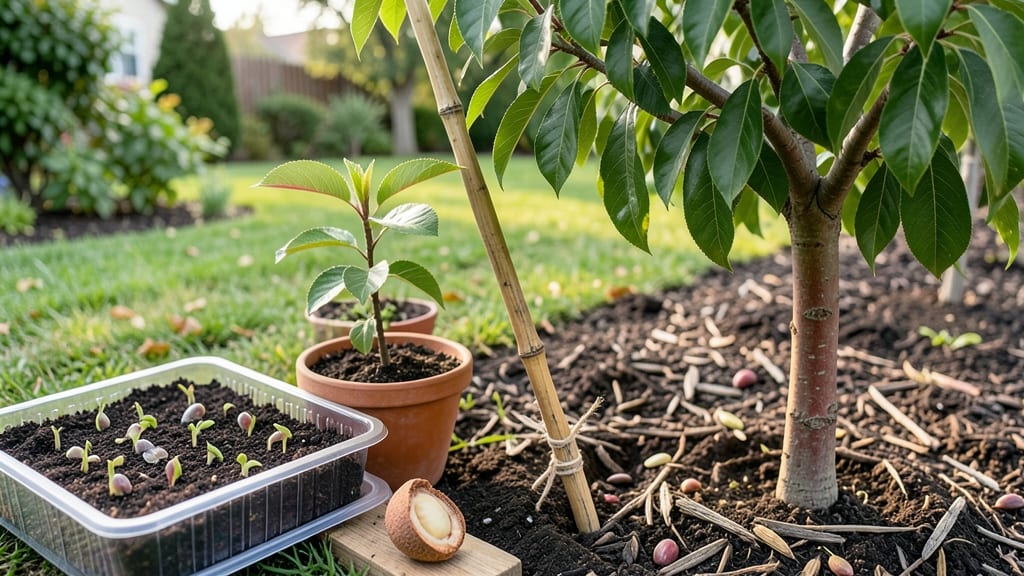
Growing a peach tree from seed to fruit is a 10-year journey that rewards patience with juicy rewards. 🌱 I’ve watched seeds sprout into towering trees, and the first homegrown peach—sweet, freestone perfection—makes every step worth it.
The key isn’t rushing; it’s understanding each stage, from the first crack in the pit to the day you pick fruit straight from your yard.
Start with fresh peach pits—never store-bought seeds—and soak them for 24 hours to break dormancy. Plant them 1 inch deep in well-draining soil, and keep them moist but not soggy. Germination takes 3-6 weeks, but the wait pays off when those first leaves unfurl.
Young trees need protection from frost, wind, and pests, so give them space to grow strong before transplanting outdoors.
By year 5, you’ll see blossoms, but fruit may take another 2-3 years. Prune in late winter to shape the tree and improve airflow, and thin fruit in summer to avoid overburdening branches.
The payoff? A tree that produces dozens of peaches—sweeter than grocery store varieties—every season if you nurture it right.
This method works best in zones 5-9, where peaches thrive in warm summers and mild winters. For colder climates, grow in containers and overwinter indoors. The biggest mistake?
Skipping pest control—aphids and borers love young trees, so monitor leaves regularly. With care, your seedling could outlive you—and keep feeding your family for decades.
📚 In This Guide
- What you need
- Instructions
- Tips and common mistakes
- Wrapping up and next steps
What you need
- ● Peach pit (seed): 1-2 fresh, plump pits from a ripe, disease-free peach (avoid hybrid varieties—they may not produce true fruit).
- ● Growing containers: 1 small pot (4-6 inches deep) for germination.
- ● 1 larger pot (12+ inches deep) or garden bed for saplings (if not planting directly outdoors).
- ● Potting soil: 1 bag of well-draining, sterile seed-starting mix (or a blend of 50% peat moss and 50% perlite/sand).
- ● Gravel or small rocks: A handful for drainage at the bottom of pots.
- ● Spray bottle: For gentle watering during germination.
- ● Plastic wrap or humidity dome: To retain moisture while the seed sprouts.
- ● Fertilizer: 1 balanced, water-soluble fertilizer (e.g., 10-10-10) for young seedlings.
- ● 1 slow-release granular fertilizer (e.g., 10-20-20) for mature trees.
- ● Pruning tools: 1 pair of sterilized pruning shears (for shaping young trees).
- ● 1 sharp knife or pruning saw (for larger branches later).
- ● Mulch: 2-3 inches of organic mulch (e.g., straw or wood chips) to retain soil moisture and suppress weeds.
- ○ Tree supports (optional but helpful): 1-2 stakes (if planting in windy areas).
- ● Soft tree ties or garden twine.
- ● Climate zone: Peach trees thrive in USDA zones 5-9 (or equivalent in other regions). Check your local frost dates!
- ● Sunlight: A full-sun location (6+ hours of direct sunlight daily)—peaches are sun-worshippers! 🌞
- ● Water access: A hose or watering can with a gentle spray nozzle (overwatering can drown roots).
- ● Patience: Seed-grown peach trees take 3-5 years to bear fruit (grafted trees may fruit sooner).
- ● Cross-pollination (for fruit): Plant two trees of compatible varieties (e.g., ‘Elberta’ and ‘Redhaven’) for better fruit set.
- ● Soil test kit: To check pH (ideal range: 6.0-7.0 for peaches).
- ● Fruit thinners: To manage overcrowded peaches (e.g., chemical thinners or hand-thinning).
- ● Pest control: Neem oil or insecticidal soap (for aphids, peach tree borers, etc.).
- ● Drip irrigation system: For consistent watering in hot climates.
- ● Tree fruit spray: To prevent fungal diseases like brown rot.
Step-by-step instructions for growing a peach tree from seed to fruit
Here’s how I’ve grown peach trees from seed to fruiting—no twists, no guesswork, just steady progress.
🌱 Step 1: Select and Prepare the Seed
Start with a fresh, plump peach pit from a ripe, disease-free fruit. Remove the pit, rinse it clean, and let it dry for 3-5 days at room temperature. This prevents mold and prepares it for stratification. I like to wrap the pit in a damp paper towel and place it in a sealed plastic bag for 8-12 weeks in the fridge—this mimics winter chilling, which is critical for breaking dormancy.
Once the pit softens slightly (you’ll feel it when squeezed), it’s ready to plant. Don’t rush this step—skipping stratification means the seed won’t germinate, or if it does, the tree will grow weak and prone to disease. Patience here pays off later.
🪴 Step 2: Plant the Seed in a Controlled Environment
Fill a 4-inch pot with well-draining potting mix (avoid garden soil—it compacts and suffocates roots). Plant the seed 1 inch deep, with the pointed end facing upward. Water lightly until the soil feels damp but not soggy. Place the pot in a warm, bright spot (around 70-75°F) where it gets indirect sunlight—like a south-facing windowsill.
Cover the pot loosely with plastic wrap to retain moisture, but prop it open slightly to allow airflow. Check the soil daily—it should stay consistently moist but never waterlogged. Germination can take 4-8 weeks, so stay patient. You’ll know it’s working when a tiny sprout breaks through the soil.
☀️ Step 3: Transplant and Provide Proper Care for Growth
Once the seedling reaches 4-6 inches tall (usually after 3-4 months), transplant it into a 1-gallon pot with fresh potting mix. Choose a spot with full sun (at least 6-8 hours daily) and well-draining soil. If growing outdoors, wait until the last frost has passed and the soil is at least 60°F. Harden off the seedling by placing it outside for 1-2 hours daily over 7-10 days before full transplant.
Water deeply once a week, ensuring the soil dries slightly between waterings. Overwatering leads to root rot, while underwatering stunts growth. Fertilize lightly with a balanced 10-10-10 fertilizer every 4-6 weeks during the growing season. You’ll see new leaves emerge—this is your signal the tree is thriving.
✂️ Step 4: Prune and Support the Tree for Fruit Production
When the tree reaches 3-4 feet tall (around 2-3 years old), it’s time to prune. Remove any dead, crossing, or weak branches using clean, sharp pruners. Cut just above a bud or branch junction to encourage new growth. Thin out crowded branches to improve airflow, which reduces disease risk. This step is crucial—without proper pruning, the tree becomes tangled and produces fewer fruits.
In late winter or early spring, apply a layer of mulch around the base (but not touching the trunk) to retain moisture and regulate soil temperature. As the tree matures, stake it if needed to prevent wind damage. You’ll start seeing small flowers in 3-5 years—this is the first sign of fruit to come!
🍑 Step 5: Harvest and Maintain for Year-Round Success
Peaches ripen in late summer to early fall, depending on your climate. Harvest when the fruit is fully colored, slightly soft to the touch, and releases easily from the tree. Avoid picking too early—unripe peaches won’t sweeten properly. Once harvested, store them at room temperature for 1-2 days or refrigerate for up to 2 weeks.
After harvest, remove any remaining fruit, leaves, or debris to prevent pests and diseases. In late fall, apply a layer of compost around the base to replenish nutrients. With consistent care, your peach tree will reward you with twist-free pods and a year-round harvest for decades to come.
Tips & tricks for growing a peach tree from seed to fruit
Here's what I learned after growing multiple peach trees from seed—these tricks make all the difference between a thriving tree and a sad, struggling sapling.
Seed Selection: Don't just grab any peach pit! Look for fruit from mature trees (at least 5 years old) that produces consistently sweet, firm peaches. The pit should be plump and free of cracks or soft spots. I've found that pits from heirloom varieties often produce more vigorous seedlings than grocery store peaches. Store-bought peaches are treated with fungicides that can inhibit germination, so if you're serious about growing, visit local orchards or farmers' markets for seed sources.
Stratification Success: The 8-12 week cold stratification period is non-negotiable for breaking dormancy, but here's my secret: I check the pit every 2 weeks by squeezing it gently. When it feels noticeably softer (like a ripe avocado), that's your cue it's ready to plant. If you're impatient, you can speed up the process slightly by placing the bag in your fridge's coldest setting, but don't rush beyond the 12-week mark. I've seen germination rates drop dramatically when seeds are cold-treated for less than 8 weeks.
Germination Environment: While the instructions mention indirect sunlight, I've found that placing the pot under a grow light for 12-14 hours daily dramatically speeds up germination. The light should be about 6 inches above the soil. If you don't have grow lights, a well-lit windowsill with plastic wrap creates a mini greenhouse effect that helps. Just remember to remove the plastic for 10 minutes daily to prevent mold. I've had seeds sprout in as little as 3 weeks with this method, though 4-8 weeks is still typical.
Transplant Timing: When your seedling reaches 4-6 inches, don't be in a hurry to transplant. Wait until you see at least 3-4 true leaves (not the initial seed leaves) before moving it to a larger pot. This gives the root system time to establish. For outdoor planting, I've learned to wait until nighttime temperatures consistently stay above 55°F—this reduces transplant shock. I also add a handful of perlite to the potting mix for the first transplant to improve drainage during this critical growth phase.
Pro Tips for Peach Tree From Seed To Fruit
- Here's what I learned after growing multiple peach trees from seed—these tricks make all the difference between a thr...
- Seed Selection: Don't just grab any peach pit! Look for fruit from mature trees (at least 5 years old) that produces ...
- Stratification Success: The 8-12 week cold stratification period is non-negotiable for breaking dormancy, but here's ...
Frequently asked questions
Got questions about growing peaches from seed to fruit? You’re not alone! Here are some of the most common queries—and their straightforward answers—to help you navigate your peach-growing journey with confidence.
How long does it take for a peach seed to grow into a fruit-bearing tree?
A peach tree grown from seed typically takes 5–7 years to bear fruit, though some varieties may take even longer. Patience is key—seedlings often produce smaller, less predictable fruit compared to grafted trees. For faster results, consider grafting a known variety onto your seedling later.
Do I need to graft my peach tree if I started it from seed?
Grafting isn’t mandatory, but it’s highly recommended! Seed-grown trees may not produce fruit true to the parent plant (e.g., a Honeycrisp seed might yield a completely different peach). Grafting a twist-free rootstock (like Lovell or Halford) ensures better disease resistance, consistent fruit quality, and earlier harvests.
What’s the best way to protect my young peach tree from pests and diseases?
Start with healthy soil and proper spacing to reduce stress. Use neem oil or copper fungicide for fungal issues like brown rot. For pests, introduce beneficial insects (like ladybugs) or use organic sprays. Prune regularly to improve airflow—prevention is easier than treatment!
Can I grow a peach tree in a container, or does it need a garden?
Yes! Dwarf or semi-dwarf varieties (like Bonanza) thrive in large containers (20+ gallons) with well-draining soil. Ensure the pot has drainage holes and place it in full sun (6+ hours/day). Move containers indoors or to a garage if frost threatens. Just avoid root-bound stress—repot every 2–3 years.
Why did my peach tree flower but not produce fruit?
Several factors could be at play: poor pollination (plant another variety nearby), late frost (damaging blossoms), or nutrient deficiencies (add citrus or fruit-tree fertilizer). Thin out excess fruit to improve size/quality. If issues persist, check for bacterial leaf spot or peach leaf curl—treat early with fungicide.
How do I know when peaches are ripe and ready to pick?
Ripe peaches yield slightly when gently pressed near the stem. They should also have a fragrant aroma at the stem end and a full, vibrant color (yellow, orange, or red, depending on the variety). Avoid picking too early—they won’t sweeten off the tree! Store at room temp for 2–3 days for peak flavor.
Wrapping up and next steps
Growing a peach tree from seed to fruit is a rewarding journey filled with patience, care, and the joy of nurturing life! 🌱 From selecting the right seed to mastering twist-free pod techniques and enjoying a year-round harvest, every step is a chance to deepen your connection with nature. Remember, even the smallest efforts yield big rewards—so don’t hesitate to start your own peach tree adventure today!
Ready to take the next step? Plant that seed, tend to your tree, and soon you’ll be savoring homegrown peaches straight from your very own orchard. Happy growing! 🍑✨