
Planting
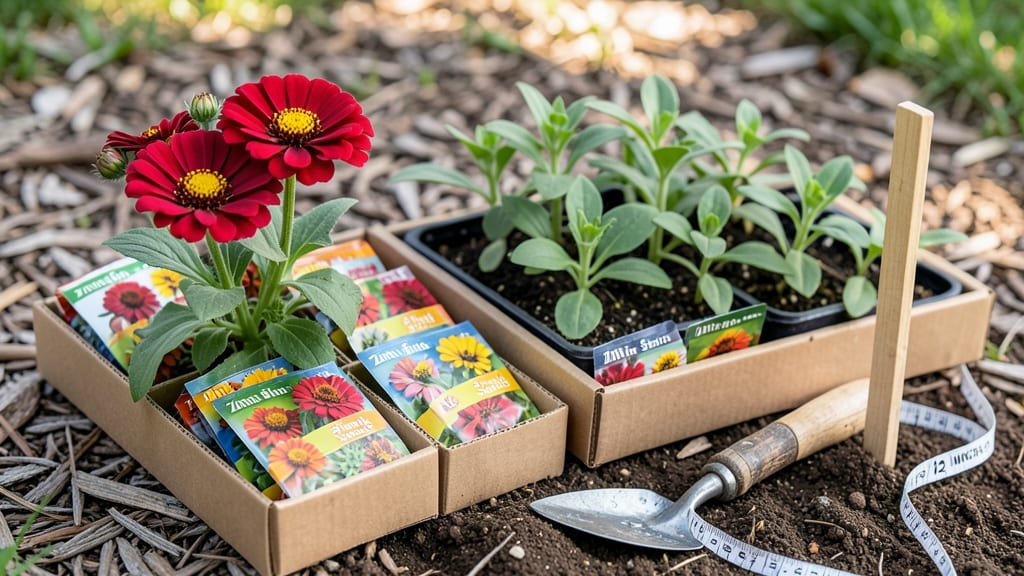
Zinnia seeds need 12-18 inches between plants to grow into those bold, dinner-plate blooms you love. 🌻 I’ve learned the hard way that crowding zinnia seedlings leads to leggy stems and fewer flowers—so I now follow the spacing math that guarantees a showstopper display.
The secret isn’t just the distance; it’s how you prep the soil, time the planting, and handle thinning.
Start with loose, well-draining soil mixed with compost—zinnias hate soggy roots. Plant seeds ¼ inch deep in rows spaced 18-24 inches apart, then thin to your target spacing once the first true leaves appear.
In hot climates, direct sow after the last frost; in cooler zones, start indoors 6-8 weeks before transplanting. The key? Sunlight—zinnias demand 6+ hours of full sun daily to reward you with those vibrant blooms.
When done right, you’ll end up with sturdy stems that support heavy blooms and a garden bed bursting with color from summer through frost. The math pays off: proper spacing means stronger plants, fewer pests, and weeks of continuous blooms instead of a quick, weak show.
Even my black thumb can’t mess this up once I got the spacing right.
Pro tip: Mark your rows with stakes or string to avoid overcrowding as plants grow. And if you’re short on space? Try container growing with 3-4 zinnias per 12-inch pot—they’ll still thrive with the same spacing rules. Now go plant those seeds with confidence!
📚 In This Guide
- What you need
- Instructions
- Tips and common mistakes
- Wrapping up and next steps
What you need
- ● Zinnia seeds – Choose heirloom, hybrid, or dwarf varieties (e.g., 'Benary’s Giant', 'Profusion', or 'Thumbelina'). Purchase 1–2 seed packets (typically 50–100 seeds per packet).
- ● Garden soil or potting mix – Well-draining, loamy soil with a pH of 6.0–7.0. For containers, use a lightweight mix (e.g., 50% peat moss, 30% perlite, 20% compost).
- ● Planting containers or garden bed – For direct sowing in the ground: A sunny, open space (6+ hours of sunlight daily) with 6–12 inches of soil depth.
- ● For container gardening: Pots with at least 6-inch depth and drainage holes. 5–7 inch diameter for single plants; 12+ inches for clusters.
- ● Watering can or hose with a gentle spray nozzle – Avoid over-saturating seeds.
- ● Garden trowel or small hand shovel – For digging furrows or planting holes.
- ● Ruler or measuring tape – To ensure proper zinnia seed spacing (see spacing guidelines below!).
- ● Seed starting tray or biodegradable pots – If starting indoors (4–6 weeks before last frost).
- ● Row markers or stakes – To label varieties and track spacing.
- ● Organic mulch (straw or shredded leaves) – Helps retain moisture and suppress weeds.
- ● Fertilizer (balanced 10-10-10 or compost) – Lightly mix into soil before planting for extra nutrients.
- ● Plant labels – To track varieties and planting dates.
- ● Knee pads or gardening gloves – For comfort during planting.
Step-by-step instructions for zinnia seed spacing
Here's how to space zinnia seeds for maximum blooms—using proven techniques that prevent overcrowding and ensure strong stems.
🌱 Step 1: Understand Zinnia Growth Habits and Spacing Math
Zinnias grow in compact clumps rather than spreading vines, which means spacing isn't just about avoiding competition—it's about airflow and stem strength. For single-stemmed varieties, plant seeds 6-8 inches apart in all directions. This gives each plant room to develop a sturdy central stem without leaning or breaking under bloom weight.
For double-flowered types (like 'Benary's Giant'), increase spacing to 10-12 inches. These varieties produce heavier blooms that require extra support. I always sketch a grid on my seed packet to visualize the layout before planting—this prevents the "oops, too close" moment later.
🌱 Step 2: Prepare the Soil and Create Planting Rows
Work the soil to a depth of 6 inches, loosening it enough for roots to penetrate without resistance. Zinnias thrive in well-draining soil with a pH between 6.0-7.0. I mix in a 1-inch layer of compost into the top 6 inches to provide nutrients without compacting the root zone.
Mark planting rows with a garden twine or string stretched between stakes. For 4-inch spacing, use a 12-inch grid (3 seeds per foot of row). For 6-inch spacing, stretch string every 2 feet and plant seeds along the intersections. This ensures even distribution and makes thinning easier later.
🌱 Step 3: Sow Seeds at the Correct Depth and Thinning Timeline
Plant zinnia seeds ¼ inch deep—no deeper, or they’ll struggle to emerge. I use my finger to make small holes and drop 2-3 seeds per spot (you’ll thin later). Cover lightly with soil and mist the area until the surface looks slightly damp but not wet. Overwatering here can cause seeds to rot before germinating.
Once seedlings reach 2-3 inches tall (about 3-4 weeks after sowing), thin to the strongest plant per spot. Use clean scissors to snip weak stems at soil level—this prevents disturbing the roots of remaining plants. If you pull seedlings, you risk damaging the root systems of those you’re keeping.
☀️ Step 4: Monitor Growth and Adjust Spacing for Full Blooms
Watch for leaf touch between plants—this is your cue to thin again. Zinnias left too close will develop weak stems that flop under bloom weight. If you see leaves brushing, remove the smallest plant immediately. Strong zinnias have deep green leaves and sturdy stems that don’t wobble when touched.
After thinning, water at the base (not overhead) to avoid fungal issues. Mulch with 1 inch of straw to retain moisture and suppress weeds. This keeps the soil evenly moist without encouraging root rot—a common pitfall when zinnias are overcrowded.
✂️ Step 5: Deadhead and Maintain Spacing for Continuous Blooms
Once flowers fade, deadhead (remove spent blooms) to encourage new flowers. This isn’t just about looks—it redirects the plant’s energy from seed production to more blooms. I pinch off flowers just above the first set of healthy leaves to promote bushier growth.
If zinnias start leaning toward the sun, they’re too close. Gently stake or support them with 3-inch bamboo stakes inserted at planting. This prevents stems from breaking under heavy blooms. With proper spacing, you’ll see stronger stems, larger flowers, and longer vase life—the whole reason we grow zinnias in the first place.
Tips & tricks for perfect zinnia seed spacing
Here's what nobody tells you about spacing zinnias—these tricks will transform your garden from patchy to show-stopping.
Visualize Before You Plant: Grab a blank sheet of paper and sketch your garden layout using the 6-8 inch spacing for single-stemmed varieties and 10-12 inch spacing for double-flowered types. I use a ruler to draw precise grids—this prevents the "oops, too close" moment after seeds sprout. Pro tip: Color-code your sketch with different shades for each variety to visualize the final bloom display.
Soil Science Matters: The 6-inch soil depth preparation isn't just about loosening dirt—it's about creating the perfect root environment. Test your soil pH first using a simple kit (zinnias prefer 6.0-7.0). If your soil is too alkaline, mix in 1 inch of peat moss into the top 6 inches to lower the pH naturally. Well-draining soil prevents root rot, which is the silent killer of zinnias.
Thinning Technique: When seedlings reach 2-3 inches, resist the urge to pull them—use clean scissors instead. This prevents disturbing the roots of your remaining plants. I always thin on a cloudy day to reduce stress on the seedlings. After thinning, give your zinnias a light watering at the base to help them recover. The 3-4 week timeline for thinning is flexible—watch the plants, not the calendar.
Deadheading Hack: Use a pair of sharp pruning shears to deadhead spent blooms just above the first set of healthy leaves. This redirects energy to produce more blooms instead of seed heads. I schedule deadheading sessions every 2-3 days during peak bloom season. For large plantings, keep a small bucket nearby to collect spent blooms—you can compost them or use them to make zinnia seed paper later!
Pro Tips for Zinnia Seed Spacing
- Here's what nobody tells you about spacing zinnias—these tricks will transform your garden from patchy to show-stopping.
- Visualize Before You Plant: Grab a blank sheet of paper and sketch your garden layout using the 6-8 inch spacing for ...
- Soil Science Matters: The 6-inch soil depth preparation isn't just about loosening dirt—it's about creating the perfe...
Frequently asked questions
Got questions about zinnia seed spacing? You’re not alone! Here are some of the most common questions—and expert answers—to help you grow a show-stopping zinnia garden with confidence.
What’s the best spacing for zinnias in containers vs. garden beds?
In containers, space seeds 6–12 inches apart (depending on variety) since roots compete for nutrients. For garden beds, aim for 10–18 inches between plants—larger varieties like ‘Benary’s Giant’ need more room to avoid overcrowding. Pro tip: Thin seedlings early to prevent disease from humidity.
Can I plant zinnias too close together? What happens if I do?
Yes, but expect stunted growth, fewer blooms, and increased pests/disease risk. Crowded zinnias compete for sunlight and water, leading to leggy stems and poor air circulation. If you’ve already over-planted, thin seedlings to the recommended spacing ASAP—they’ll bounce back!
Do zinnias need to be spaced differently in hot vs. cool climates?
Not drastically! However, in hot, dry climates, give plants extra space (12–18 inches) to reduce stress from competition. In cooler regions, closer spacing (8–12 inches) works well since growth slows. Key factor: Soil moisture—water deeply but less frequently to encourage strong roots.
What if my zinnias aren’t blooming? Could spacing be the issue?
Possibly! Overcrowding stresses plants, diverting energy to leaves instead of flowers. Check for:
- Spacing: Thin to 10–18 inches apart.
- Sunlight: Ensure 6+ hours of direct sun daily.
- Deadheading: Remove spent blooms to encourage new flowers.
Are there zinnias that tolerate closer spacing better?
Yes! Dwarf varieties like ‘Crystal’ or ‘Thumbelina’ thrive in 6–8 inches of space, making them ideal for borders or containers. Benary’s Giant or ‘State Fair’ need 18+ inches. Check seed packets for variety-specific guidelines—they’re your best friend!
Wrapping up and next steps
Mastering zinnia seed spacing isn’t just about guesswork—it’s about unlocking the full potential of your garden with a little science and patience. 🌸 By following the right spacing guidelines (whether for compact, medium, or giant varieties), you’ll enjoy vibrant blooms, better airflow, and fewer pests. Now that you’re armed with the know-how, there’s only one step left:
🌱 Roll Up Your Sleeves and Plant!
Grab those seeds, mark your rows, and let the magic happen. Keep an eye on your zinnias as they grow—soon, your garden will be a burst of color, and you’ll be the proud gardener who nailed the spacing game. Happy planting!