
Lawn
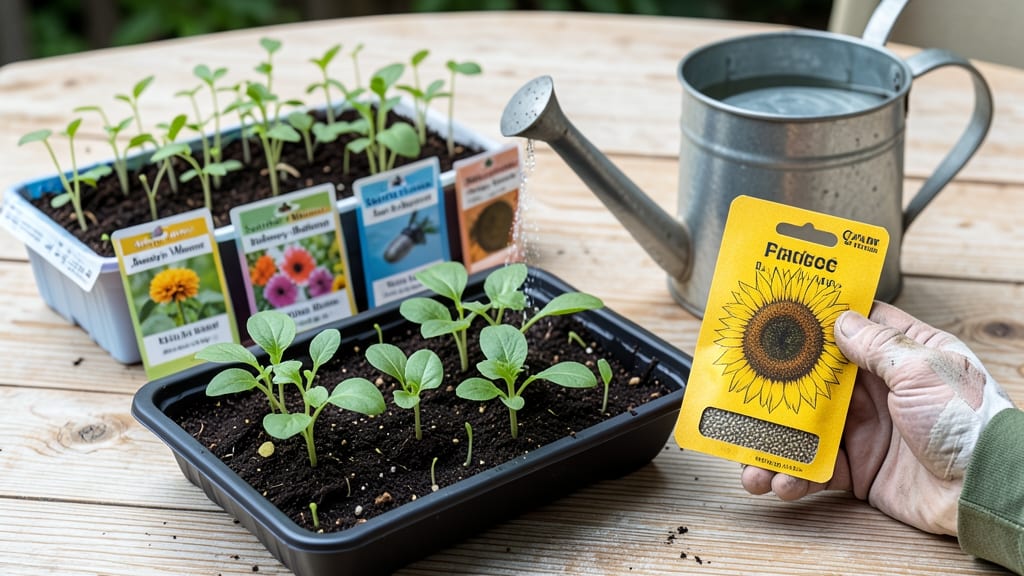
Mastering common flower seed identification saves you from guessing what will bloom in your garden. 🌸 The wrong seed packet can mean a sea of weeds instead of the zinnias you wanted—so let's break down the key traits that distinguish common seeds: shape, size, texture, and color patterns.
Take sunflower seeds, for example: they're large, flat, and striped with black and white, while marigold seeds are tiny, ribbed, and resemble little brown teardrops. Zinnia seeds look like tiny ovals with a papery coating, while cosmos seeds are even smaller with feathery tufts.
These visual cues make all the difference when sourcing seeds or cleaning up last year's mix.
Once you recognize these patterns, you'll spot them instantly at garden centers or in your own seed stash. A quick glance tells you whether you're holding annuals (like zinnias) or perennials (like black-eyed Susans), and whether they need full sun or partial shade.
This knowledge turns seed shopping from a gamble into a confident, creative process.
We'll cover the most common varieties—wildflowers, cottage garden favorites, and bold annuals—so you can match seeds to your vision. No more surprises when those tiny packets finally sprout into something unexpected (and unwanted). Let's get those blooms identified!
📚 In This Guide
- What you need
- Instructions
- Tips and common mistakes
- Wrapping up and next steps
What you need
- ● Magnifying glass (10x magnification) – Essential for examining tiny details like seed texture, shape, and vein patterns.
- ● Field guide or printed reference sheet – A visual guide (like this one!) to cross-check your findings. Pro tip: Laminate it for durability! 🔥
- ● Notebook & pencil – For jotting down observations (size, color, location, etc.). A waterproof version is ideal for outdoor use.
- ○ Small plastic bags or seed envelopes – Collect 3–5 seeds per sample to study later. Optional: Label them with a permanent marker.
- ● Ruler or measuring tape – Measure seed length/width (in millimeters) for precise ID.
- ● Smartphone with a camera – Capture close-ups (use the macro mode!) and compare with online databases like blank">iNaturalist or blank">Seed ID apps.
- ● Gloves (nitrile or gardening gloves) – Protect your hands from prickly seeds (e.g., milkweed) or sap.
- ● Portable UV flashlight – Some flowers (like black-eyed Susans) reveal hidden patterns under UV light! ✨
- ● Seed dissection kit – Includes tweezers and a scalpel for examining internal structures (advanced users).
- ● Drying tray or silica gel packets – Preserve delicate seeds for long-term study.
- ● Local flora app (e.g., PictureThis, PlantNet) – Instantly compare your finds with a database.
- ● Pruning shears – Safely harvest seed pods without damaging the plant.
How to identify common flower seeds by shape and size
Here's how I break down flower seeds into easy-to-remember groups—no microscope needed.
🌱 Step 1: Sort Seeds by Basic Shape Categories
Start by holding seeds against a white surface in good light. The first thing to notice is whether they're round, oval, flat, or elongated. Round seeds like larkspur or snapdragons often have a smooth, almost spherical shape, while flat seeds like poppies resemble tiny coins with ridges.
Oval seeds—think marigolds or zinnia—tend to have one slightly pointed end, while elongated seeds like cosmos or sunflower look more like tiny grains or beans. This initial shape sorting cuts your identification time in half. I keep a small tray with labeled compartments for each shape category to avoid mixing them up.
🌿 Step 2: Examine Surface Texture and Color
Next, run your fingertip gently over the seed's surface. Smooth seeds like petunia or geranium feel almost silky, while textured seeds like dahlia or rudbeckia have noticeable bumps or ridges. Color matters too—dark seeds like black-eyed Susan often have a glossy finish, while lighter seeds like bachelor's button may appear matte.
Here's the thing—some seeds change color when dry. A freshly harvested lupine seed might look pale, but older ones develop a deep brown or black hue. Always compare against reference photos if possible, but trust your touch first. I keep a small magnifying glass handy for tricky seeds like sweet pea, where texture clues are subtle.
☀️ Step 3: Check for Distinctive Markings or Attachments
Look for wings, tufts, or other unique features. Seeds with wings—like milkweed or lamb's quarters—often have delicate membranes that help them catch the wind. Seeds with tufts (like dandelion) have fluffy attachments that make them look like tiny parachutes.
Some seeds come attached to their parent plant's calyx (the leafy part beneath the flower). Poppy seeds often arrive still encased in their papery husk, while hollyhock seeds may have spiky protrusions. These natural attachments are your best clues—no two seed types share the same combination of shape, texture, and attachment style.
⏰ Step 4: Compare Against Known Seed Sizes
Use a standard ruler or seed tray grid to measure seeds against known sizes. Most annual flowers fall into these rough categories:
- Tiny (1/8 inch
- Small (1/4 inch
- Medium (1/2 inch
- Large (> 3/4 inch
- Small (1/4 inch
I keep a reference card with these measurements taped to my seed-sorting tray. If a seed doesn't fit neatly into one category, it's likely a wildflower mix—those always require extra scrutiny. For example, black-eyed Susan seeds are medium-sized but have a distinctive notched edge that sets them apart from similar-looking coneflower seeds.
🔍 Step 5: Cross-Reference with Seed Coat Patterns
The final step is examining the seed coat pattern under bright light. Some seeds have network-like veins (like snapdragons), while others display concentric rings (common in dahlia). A single dark stripe often means lupine, and speckled patterns typically belong to sweet pea or morning glory seeds.
Here's where a seed identification guidebook or app comes in handy. I use the free "Seed ID" app to snap photos of tricky seeds and compare them against its database. The key is patience—some seeds, like foxglove, require close inspection of their hairy texture, while others, like cornflower, reveal their identity through tiny papery wings.
Tips & tricks for mastering flower seed identification
Real talk: Flower seed identification gets easier when you know what to look for beyond just shape. These tricks will help you spot details that make all the difference between a guess and a confident ID.
Lighting is Everything: Natural daylight or a bright LED lamp is your best friend—it reveals subtle textures and colors that can't be seen under dim lighting. I've spent hours squinting at seeds under poor light, only to realize the key identifying feature was hidden in plain sight. Place your seeds against a white background (like a piece of paper or foam board) to eliminate shadows and see true colors. For tricky seeds like foxglove, I even use a small magnifying lamp to highlight fine details.
Texture Tells More Than You Think: Don't just look at seeds—touch them! Smooth seeds like petunia feel almost silky, while others like dahlia have noticeable ridges or bumps. The difference between a silky geranium seed and a rough rudbeckia seed can be the deciding factor. Here's what nobody tells you—some seeds change texture as they dry. Fresh lupine seeds might feel soft, but older ones develop a papery texture that's easier to identify.
Size Comparison Shortcut: Instead of measuring each seed individually, create a reference chart with common sizes using everyday objects. A 1/4-inch seed (like marigold) is roughly the size of a grain of rice, while a 1/2-inch seed (like sunflower) matches a small pea. I keep a ruler with these reference points marked and tape it to my sorting tray. This visual reference saves time when you're sorting through hundreds of seeds at once.
Attachment Clues Don't Get Enough Credit: The way seeds attach to their parent plant or other structures can be the most distinctive feature. Poppy seeds often arrive in papery husks, while hollyhock seeds may have spiky protrusions. Even the calyx (the leafy part beneath the flower) can be a game-changer. I've identified dandelion seeds by their tufts alone—those fluffy attachments are unmistakable once you know what to look for. Pay attention to these natural connections; they're often the most reliable identifiers.
Pro Tips for Common Flower Seed Identification
- Real talk: Flower seed identification gets easier when you know what to look for beyond just shape.
- Lighting is Everything: Natural daylight or a bright LED lamp is your best friend—it reveals subtle textures and colors that can't be seen under dim lighting.
- Texture Tells More Than You Think: Don't just look at seeds—touch them!
Frequently asked questions
Got questions about flower seed identification? You’re not alone!
Whether you’re a gardener troubleshooting a mystery seed packet or a beginner eager to grow wildflowers, here are answers to the most common queries—plus a few pro tips to keep your green thumb thriving.
How do I tell if a flower seed is viable before planting?
Test viability with a simple water float test: Place seeds in a glass of water. Viable seeds sink (they’re heavy with stored energy), while hollow or dead ones float. For extra accuracy, try the paper towel method: Moisten a paper towel, sandwich seeds between two, and check for sprouts in 3–7 days. Pro tip: Store seeds in a cool, dry place (like a sealed jar in the fridge) to extend their shelf life for up to 5 years!
When is the best time to plant flower seeds outdoors?
Timing depends on your climate and the flower type! For cool-season flowers (like pansies or snapdragons), plant seeds 4–6 weeks before the last frost (typically early spring or late summer). Warm-season flowers (e.g., marigolds, zinnias) thrive when soil temps hit 60°F+—wait until after the last frost. Annuals often have it printed on their packets, but perennials may need fall planting for roots to establish before winter.
What are some easy-to-identify flower seeds for beginners?
Start with these foolproof picks:
- Sunflower – Large, striped seeds (resemble tiny pumpkin seeds). Fast-growing and hardy!
- Zinnia – Tiny, oval seeds (often black or brown). Bright blooms in 6–8 weeks.
- Marigold – Small, wrinkled seeds (orange or tan). Repels pests naturally.
- Nasturtium – Round, pea-like seeds (bright colors). Edible and self-seeding.
Why aren’t my flower seeds germinating? Troubleshooting tips.
Germination fails for a few common reasons:
- Too deep – Most seeds need light to sprout; plant no deeper than 2–3x their width.
- Wrong soil temp – Use a seedling heat mat (70–85°F) for slow starters like petunias.
- Moisture issues – Keep soil consistently damp (not soggy). Mist seeds daily until sprouts appear.
- Old seeds – If seeds are >2 years old, viability drops. Test a few first!
Can I identify wildflower seeds without a guidebook?
Use these field-tested tricks:
- Shape & size – Compare seeds to common objects (e.g., dandelion seeds = clock “seeds,” milkweed = fluffy parachutes).
- Color cues – Black seeds (e.g., okra), white (lamb’s quarters), or iridescent (lupine).
- Seed heads – Snap off a dried head and shake it over paper. Unique patterns (e.g., yarrow’s tiny umbrellas) reveal the plant.
- Apps to the rescue – Try PictureThis or iNaturalist—upload a photo, and AI identifies seeds/flowers in seconds!
Wrapping up and next steps
Mastering common flower seed identification opens up a world of gardening possibilities—whether you're reviving a wildflower meadow or adding vibrant blooms to your yard! 🌸 By learning to recognize shapes, colors, and growth patterns, you’ve taken the first step toward creating a thriving, pollinator-friendly space.
Now, grab those seeds, get planting, and watch your garden transform into a stunning masterpiece.
Ready to dive deeper? Start small:
- Pick one or two seeds to grow this season.
- Join a local gardening group for hands-on tips.
- Explore seed-saving techniques to preserve your favorites!